
Introduction
Following on from our guide, How to Solve the Rubik’s Cube, it’s time to memorise the Rubik’s Cube sequences. The transition from following instructions to performing from memory is a significant step.
This article delves into the power of mnemonics to help you memorise the Rubik’s Cube. If you’re familiar with mnemonics, skip to the Memorise the Rubik’s Cube section. For newcomers, a brief introduction to mnemonics awaits.
Table of Contents
An Introduction to Memory Mnemonics
Mnemonics shine by forging associations between information through imagery, words, or concepts. They leverage the brain’s ability to recall visual and spatial data, making them an ideal tool for memorising the Rubik’s Cube.
Story-Telling
Our brains are wired to remember compelling narratives over mundane lists of information. Here are two examples which show how storytelling can be a powerful memory tool. Later, we will use these same techniques to memorise the Rubik’s Cube.
Example 1
Consider a scenario where you must memorise a shopping list because your phone is about to die. By crafting a vivid story involving the items on your list, you enhance your ability to recall them later. This principle applies to memorising the Rubik’s Cube. By associating each step with a part of a memorable story, you can improve your recall.
Here is the list of five items written in a text on your phone:
- Bread
- Milk
- Strawberries
- Cereal
- Batteries
Now for the story!
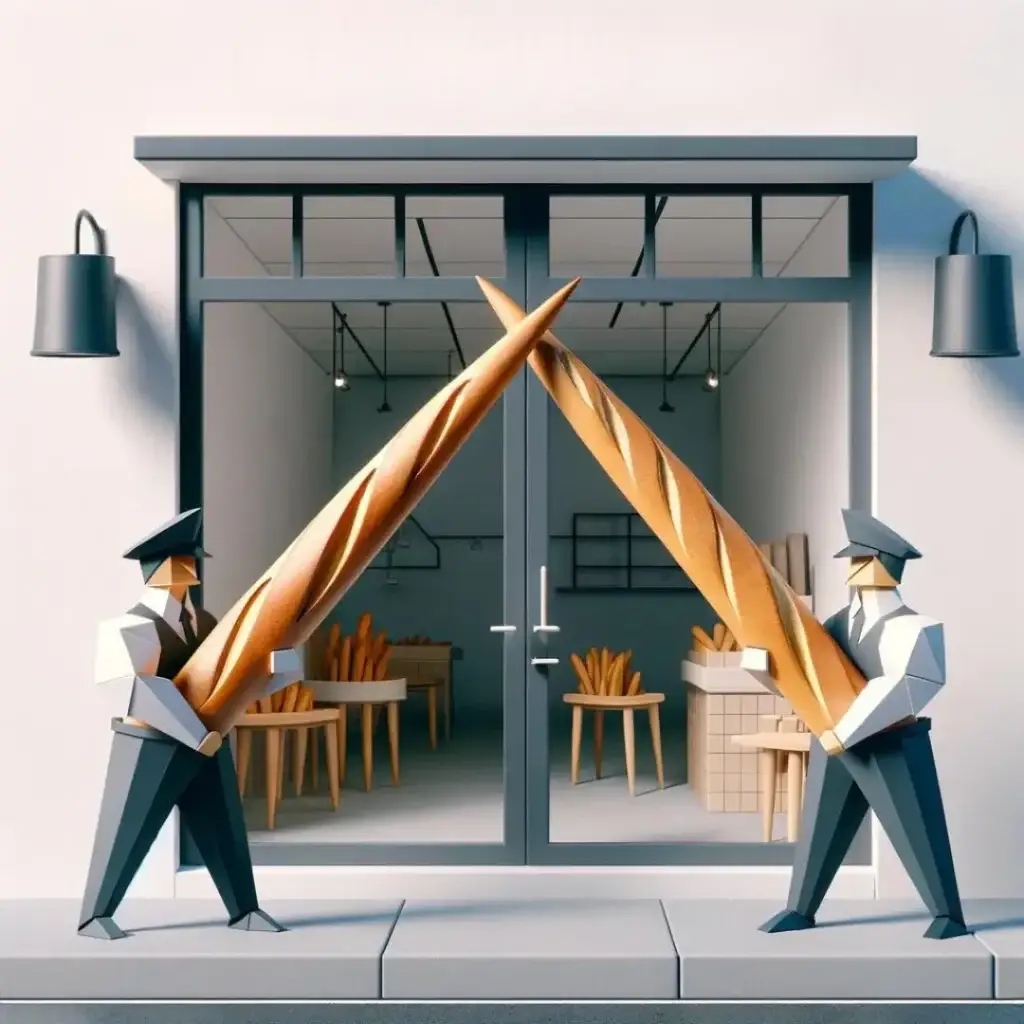
As you go to enter the shop, two security guards stop you. They stand holding bread baguettes like swords across the entrance, blocking your way. The freshly baked bread smells so good you can almost taste it.

Your friend, already in the shop, sees you and rushes to help. They grab a nearby milk carton, open it and throw it on the floor beside the guards. The guards slip over on the milk, giving you your chance to run past them.
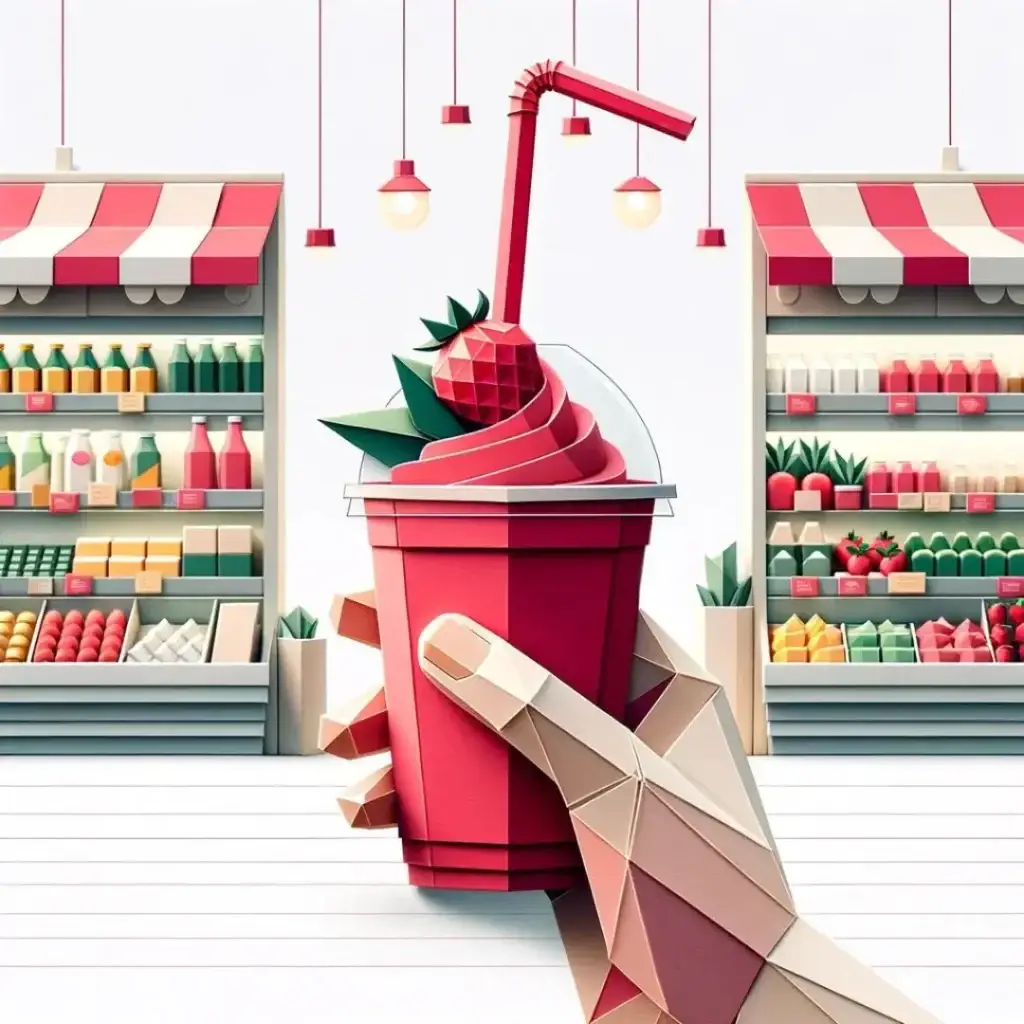
As you enter the shop, you are greeted by a kiosk handing out free smoothies to its customers. They hand you a smoothie with a bright red straw in it. The cold smoothie is delicious and refreshing as you gulp it down.
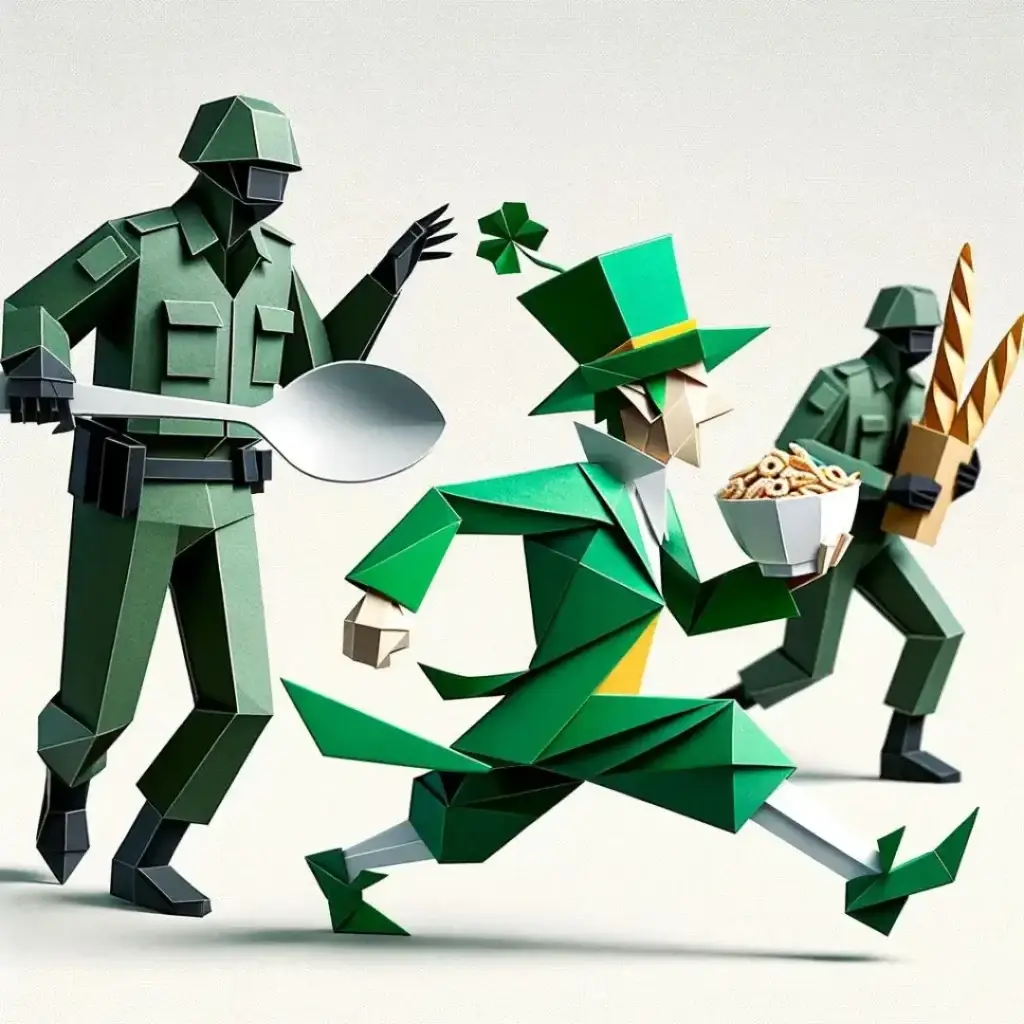
You freeze as you hear someone shout, “You’ll never get me lucky charms!”. A leprechaun races past and knocks the smoothie out of your hand. He’s eating a bowl of cereal, and the security guards are in hot pursuit.

You are drained of energy from the emotional shopping experience. You go straight to the battery aisle and slot a brand-new battery into the compartment on top of your head. “Much better!” you think to yourself.
Now, all you need to do is remember your PIN to pay! If only we had a way to remember that, too!
The Peg System
The peg system associates numbers with words, aiding in memorisation. In this example, it is used to memorise a PIN, yet it demonstrates the strategies we will use to memorise the Rubik’s Cube.
Here are some examples for the numbers 0-9.
- 0 – Hero (I prefer to use ‘zero’ rather than ‘nought’ as rhyming is more straightforward)
- 1 – Nun
- 2 – Shoe
- 3 – Tree
- 4 – Door
- 5 – Hive
- 6 – Sticks
- 7 – Heaven (or any imagery you associate with heaven)
- 8 – Plate
- 9 – Wine
So, how do you use these words? We’ll see an example now.
Example 2
Let’s use the peg system to create a story to memorise a 4-digit PIN (2834). If your PIN happens to be 2834, I apologise for scaring you. The sequence of associated words from the peg system is:
- Shoe – 2
- Plate – 8
- Tree – 3
- Door – 4
Imagine yourself in your kitchen opening the mail. You open a letter from the bank, and now you’re holding your new credit card.

You notice it has cartoon-like legs coming out the bottom with shoes at the end!
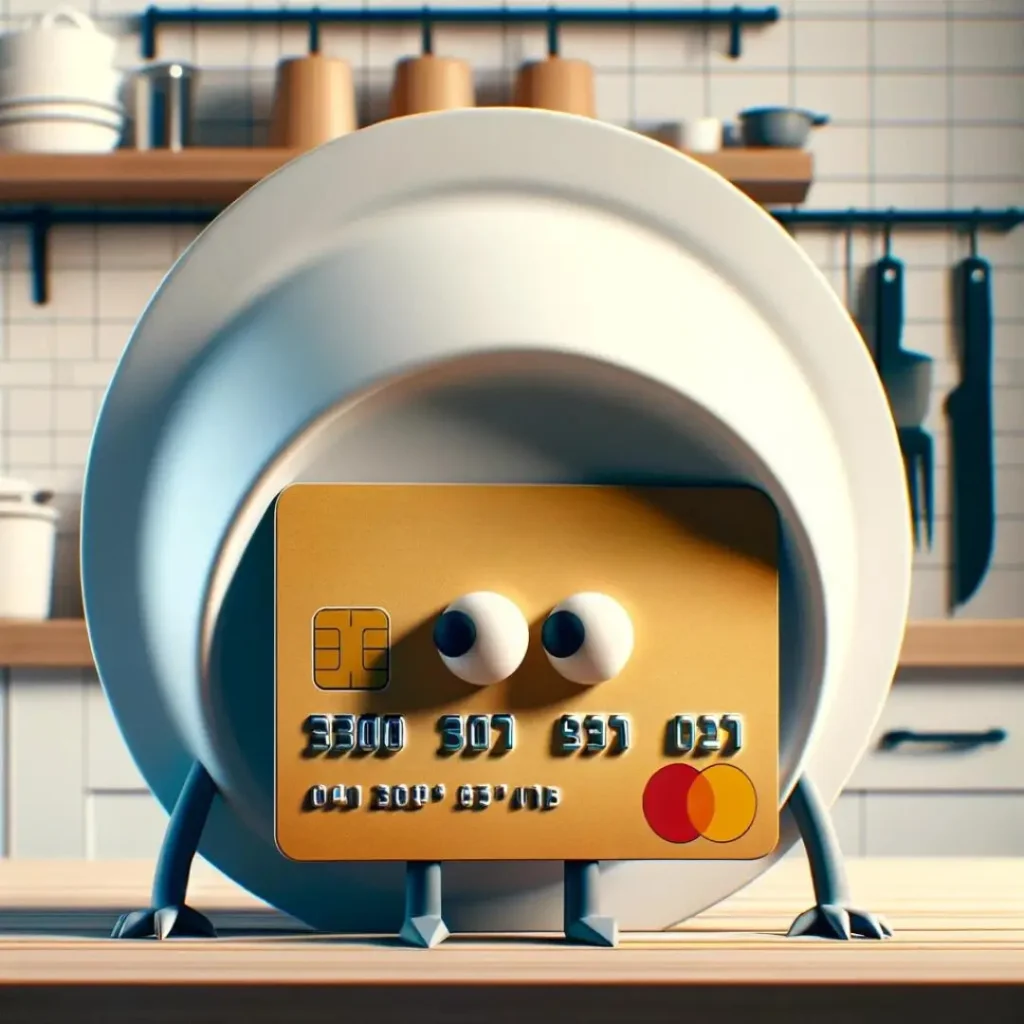
In your shock, you drop the card on the kitchen counter. Scared, the card runs and hides under the plate you used to eat your toast.
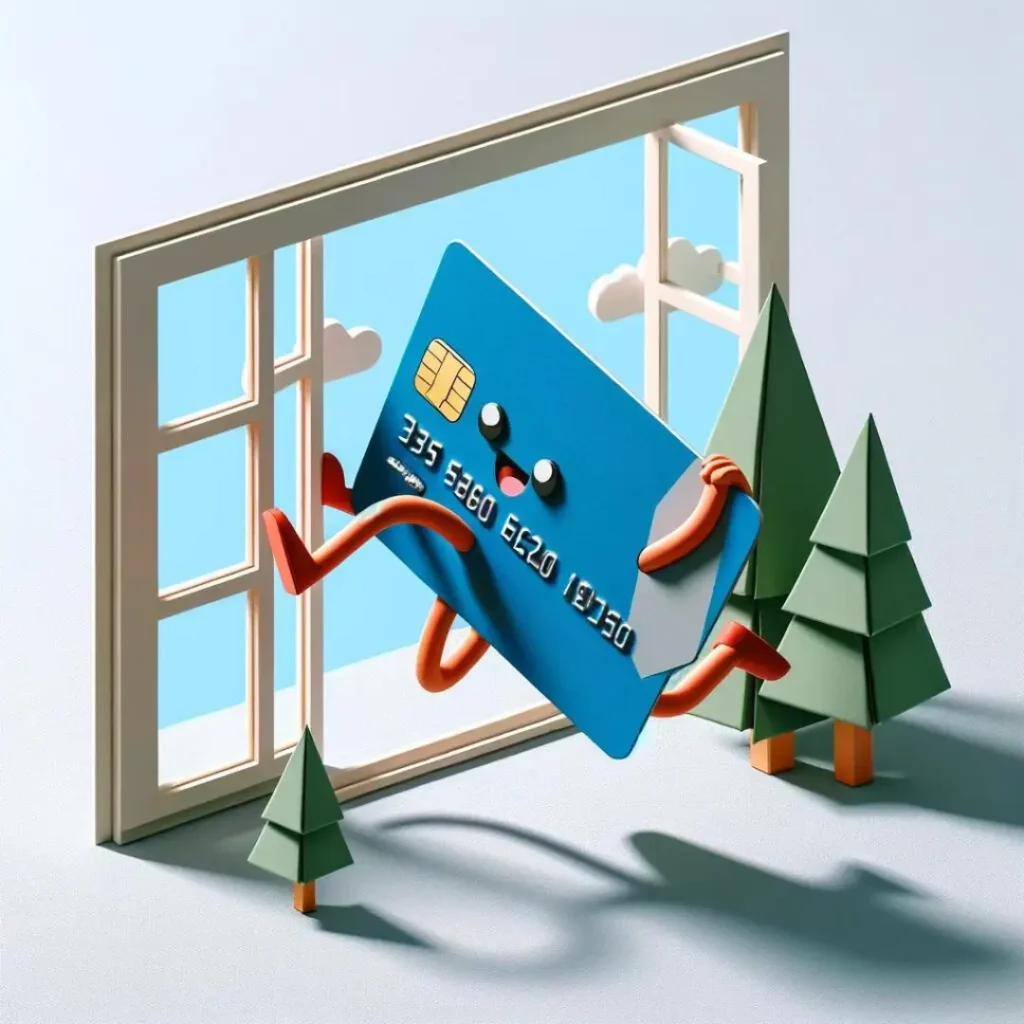
As you reach for the credit card, it makes a run for it and jumps out the kitchen window. It lands in a tree just outside your home.
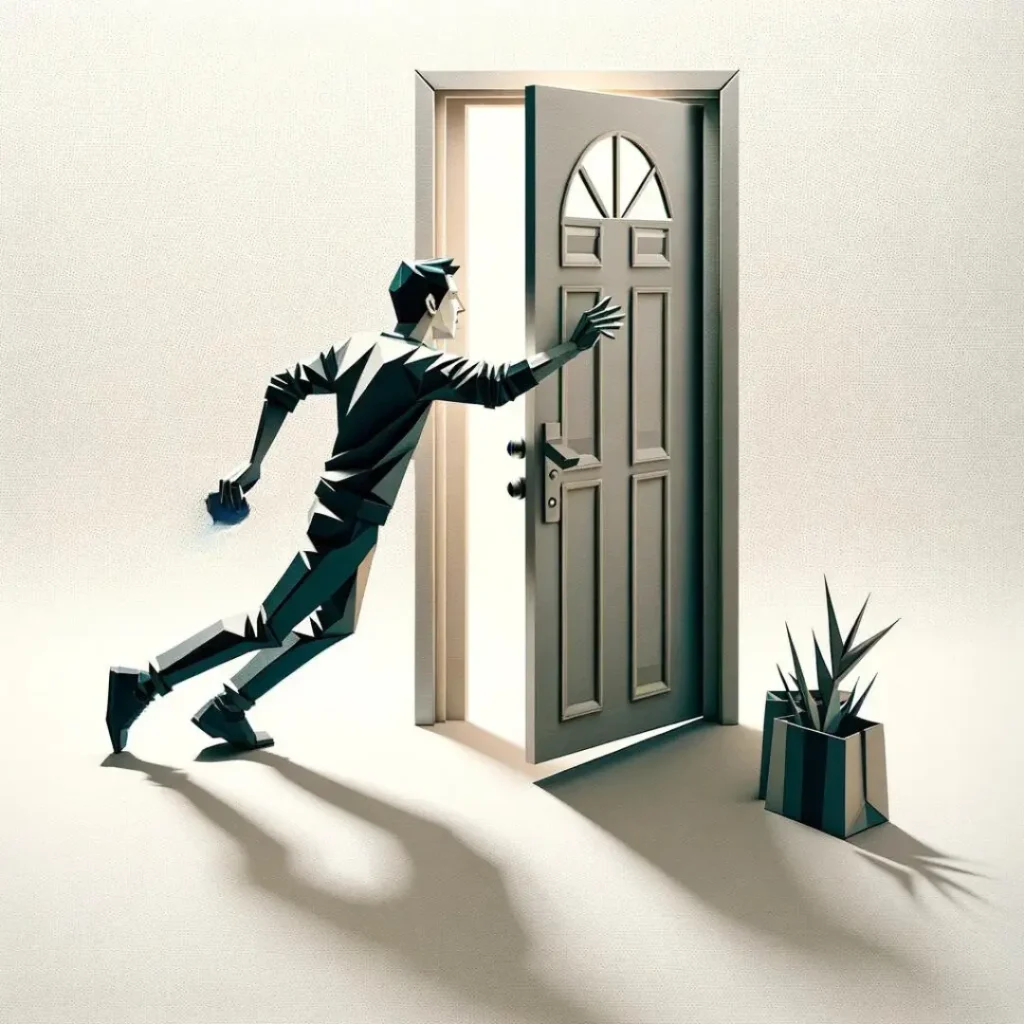
Terrified the neighbours might see your sentient credit card, you run out of the kitchen and grab the front door handle, desperate to find it before someone else does first…
And there you have it. You won’t be forgetting your PIN anytime soon. Translating the items back to numbers will be easy because we’ve ensured they rhyme.
Note: Use spaced repetition to ensure something stays in your memory forever. The idea is to go back and revise the story at increasingly large intervals. For example:
- Day 1 – create the story
- Day 2 – Revise
- Day 5 – Revise
- Day 10 – Revise
- Day 30 – Revise
That should be more than enough to keep the story in your long-term memory. During these revisions, you will find components of your story harder to recall. When this happens, try rewriting that part to make it more exciting or emotional. Why? I have no idea; that’s just how our brains work.
Memorise the Rubik’s Cube
The core of this guide is a story for you to follow using visual cues related to the Rubik’s Cube’s manoeuvres. You will dedicate more time to memorise the Rubik’s Cube algorithm, but it will stay with you.
Tip: The blue boxes contain the story. The other pieces of text help to give context to the story.
Tip: Some parts of the article have symmetrical right and left versions of routines. One example is the right and left triggers in the petal-hunting birds section. We’ll show the right version; the moves are symmetrical in the left version.
1. Making the Daisy

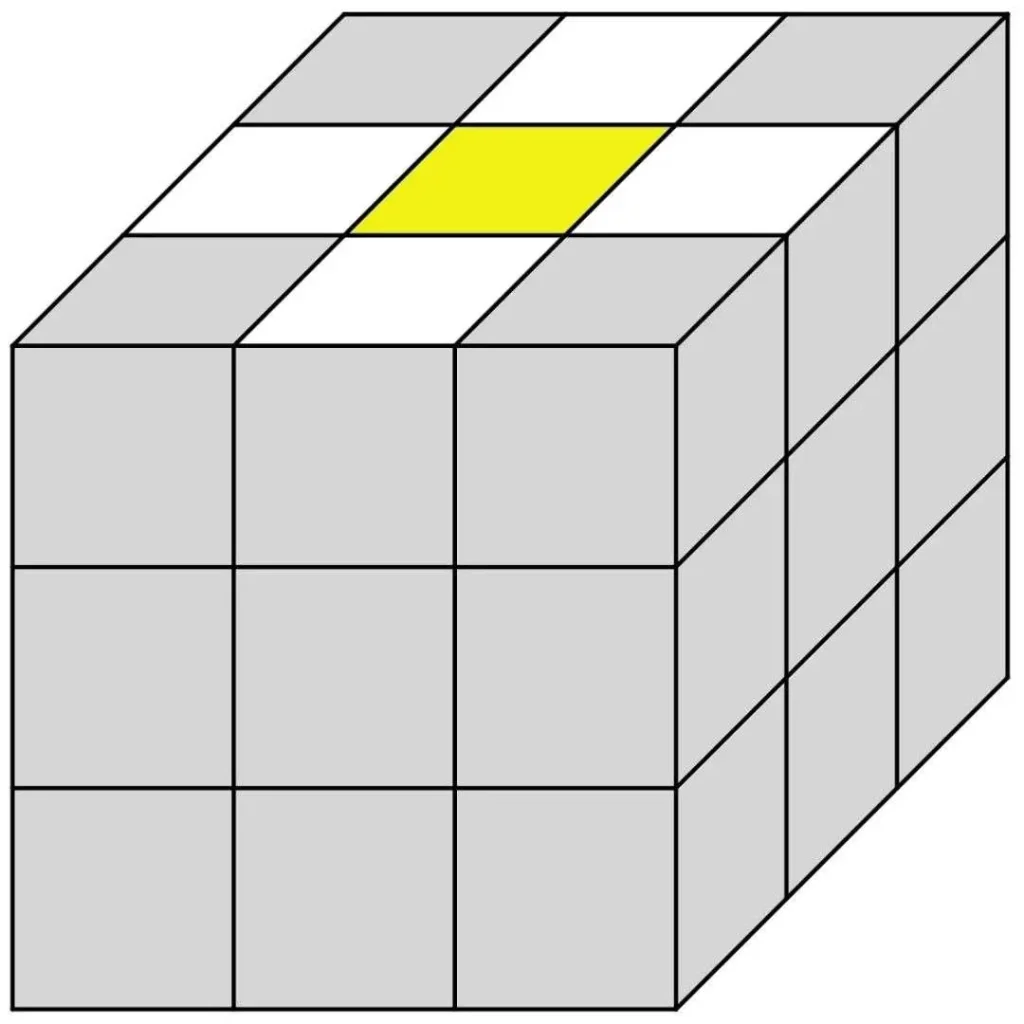
It’s hunting season! The hunter takes a step out into the crisp Spring air. He wanders into the woods and finds the first daisy of Spring lying broken on the ground. He picks up the daisy and fixes it, making the daisy.
As for how to make the daisy, we’ll leave that to you. Making the daisy is more about problem-solving than memorising the Rubik’s Cube. If you go through our article here, you’ll learn some tips to help you.
2. The White Cross
We transfer the white petals to the bottom face to make the white cross. Let’s meet our first two mnemonic devices:
- The Jar Lid – The Rubik’s Cube is like a jar of daisies. The top face of the Cube is the lid to open the jar.
- The Time Machine – The front face of the Rubik’s Cube is a time machine if we imagine it as a clock face. As it turns clockwise, we travel forward in time. As it turns counter-clockwise, we travel backwards through time.
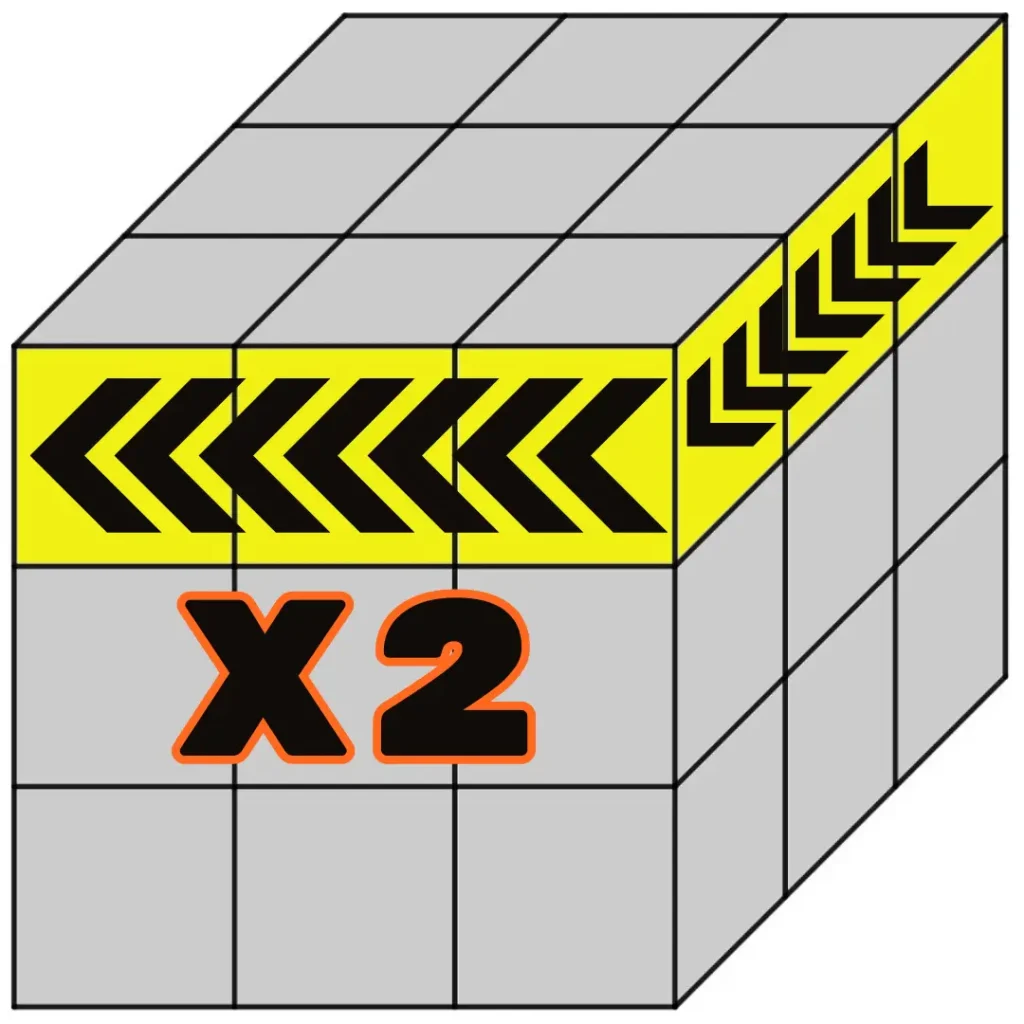
If you recall our previous article, we turn the top face until we align the coloured petals. We then turn the front face twice until the white petal is on the bottom face. With that in mind, consider the following story:

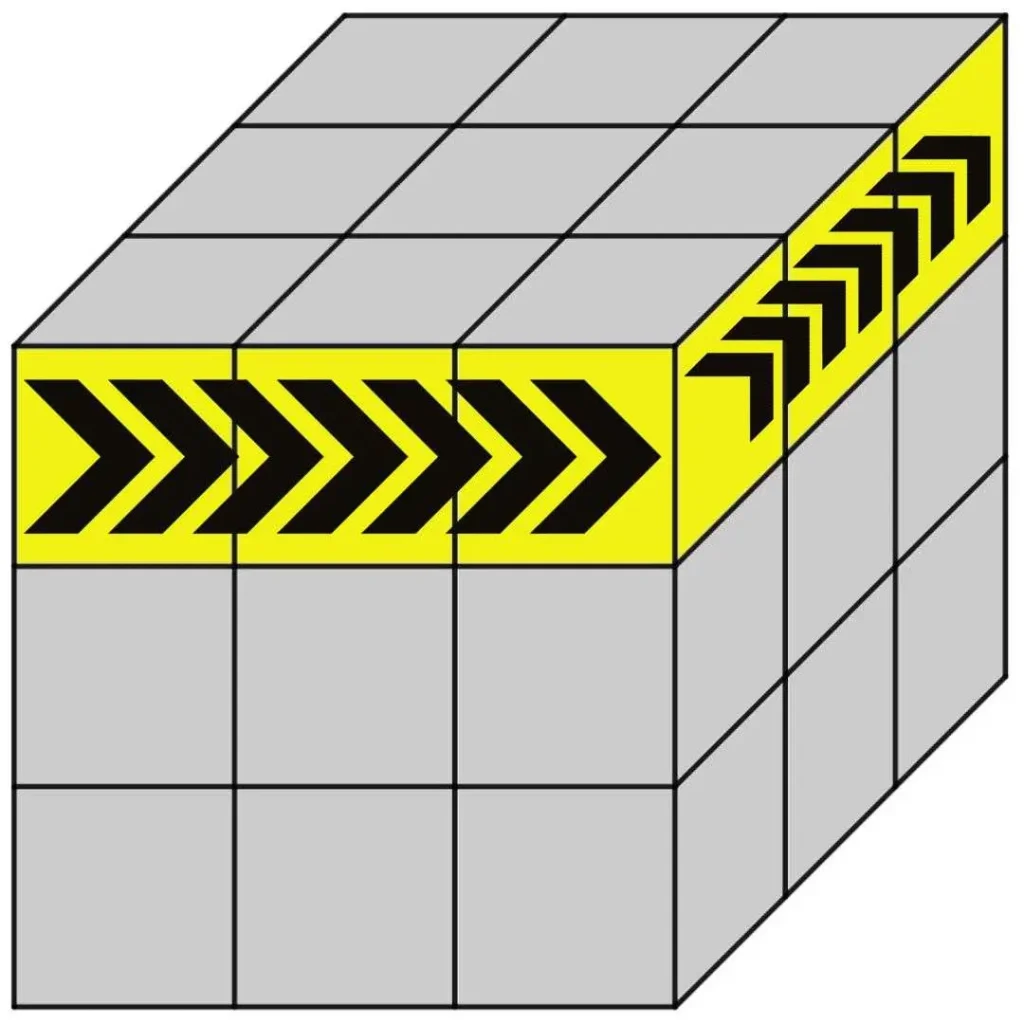
Having made the daisy, the hunter goes to add the daisy to his jar of daisies. To open the jar, he turns the lid until it aligns and hears a loud “Click!” (Turn the top layer until the colours align).
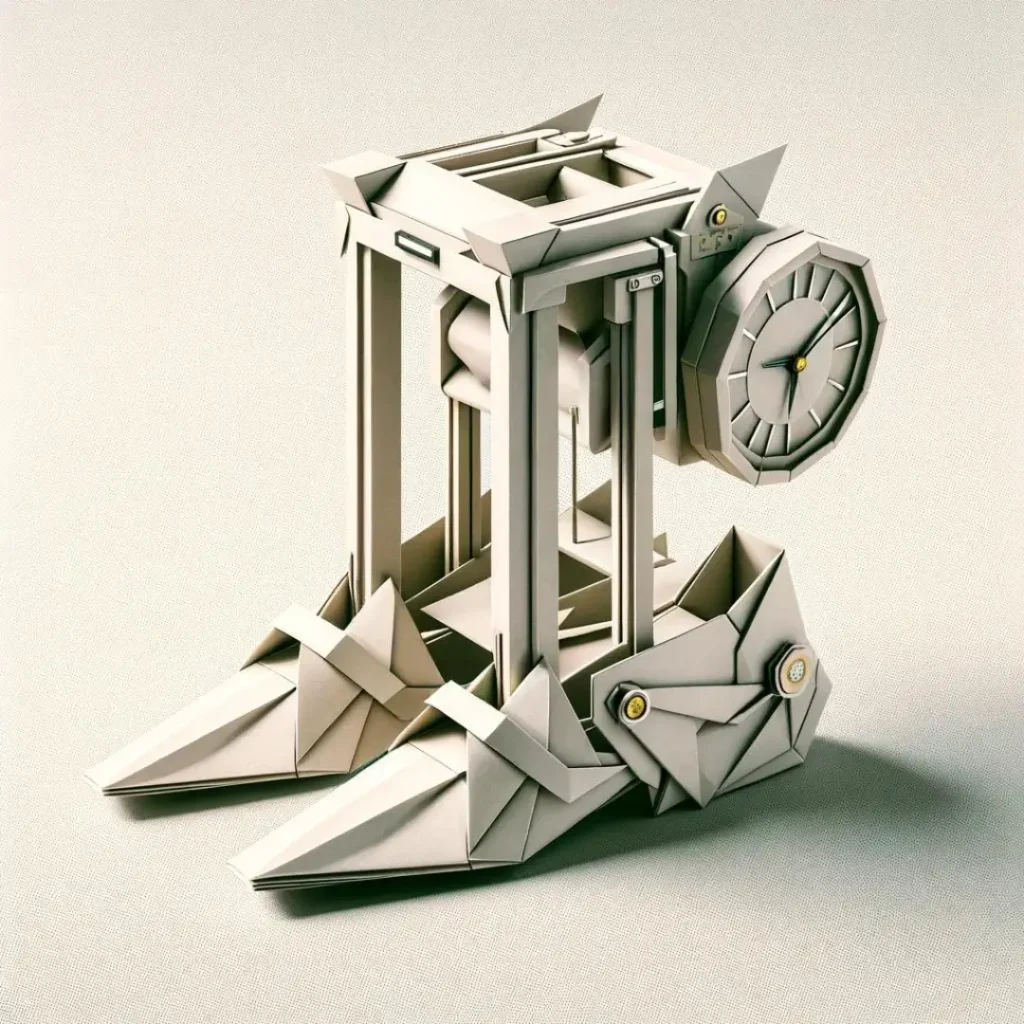
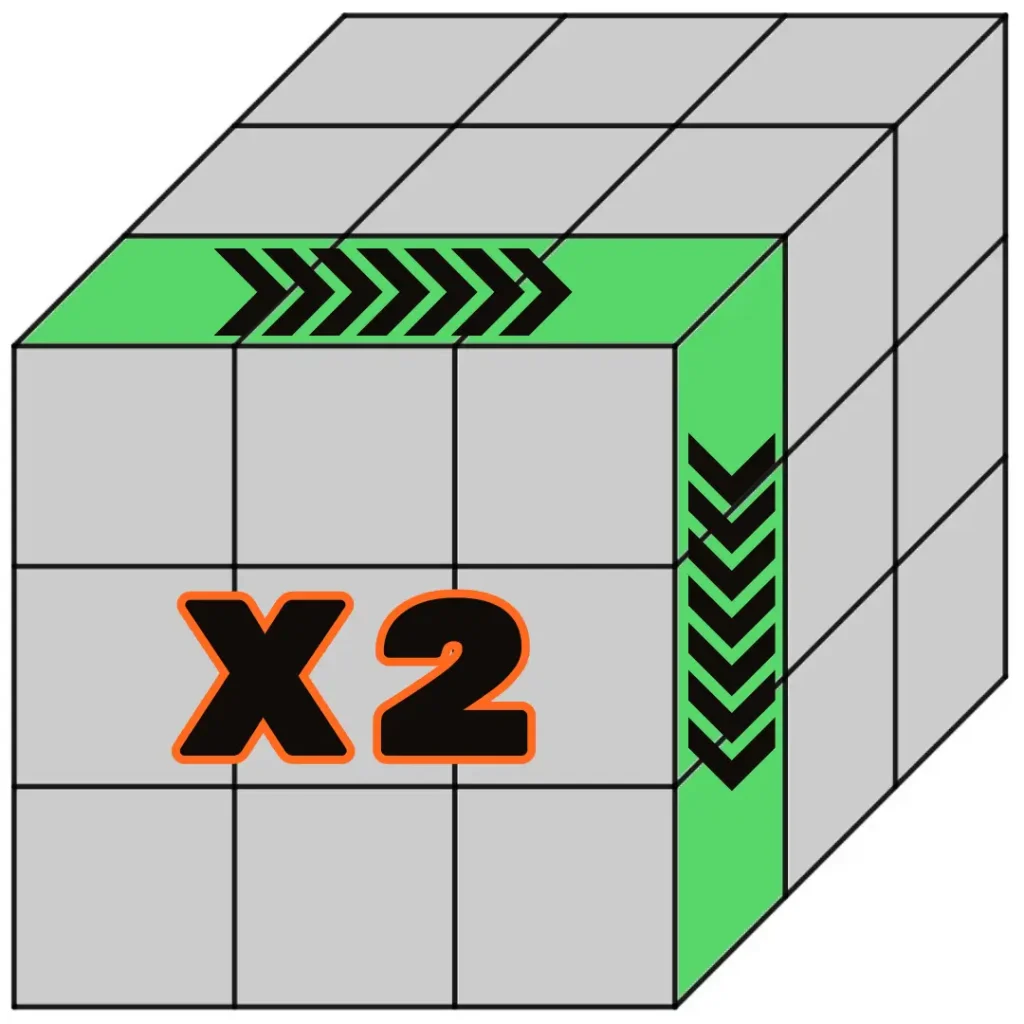
The jar transforms into a time machine! As if that wasn’t ridiculous enough, he sees the time machine is wearing a pair of shoes! (The shoe means two in the peg system, reminding us to turn the front face twice).
3. The Petal-Hunting Birds
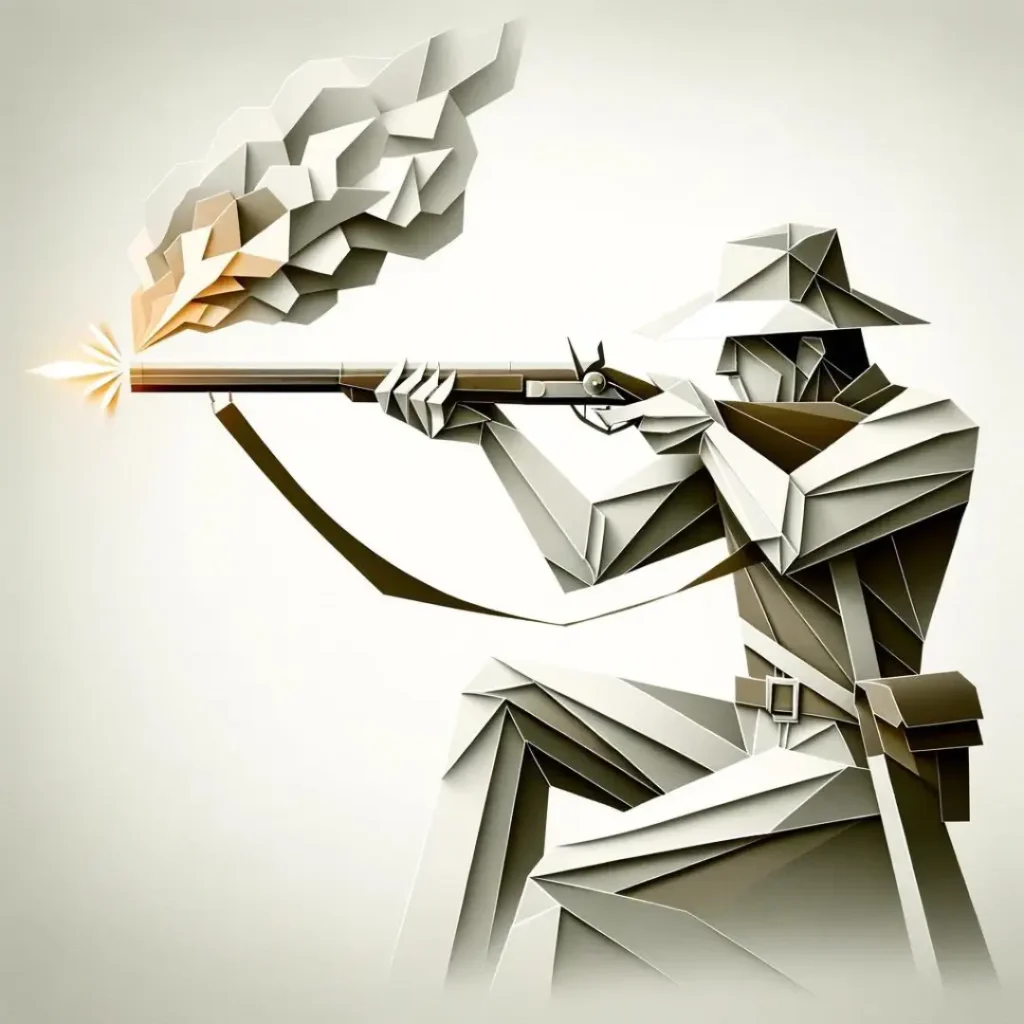
Before moving on with the story, let’s recall the right and left triggers. Let’s focus on the right trigger. The “right” comes from the fact we can perform all four moves with our right hand. The “trigger” comes from the hunting mnemonic below. Notice how the hunter is standing at the right of the frame and firing his gun to the left. The gun’s firing (step 2) represents the top face turning left because the bullet moves left. The reload (step 4) means the top face is moving right because “reloading” is the opposite of “firing”.
If you want to successfully memorise the Rubik’s Cube, you will need to be familiar with both left and right triggers.
When we refer to the left and right triggers in the story, these are the images you can refer to:
The Right Trigger
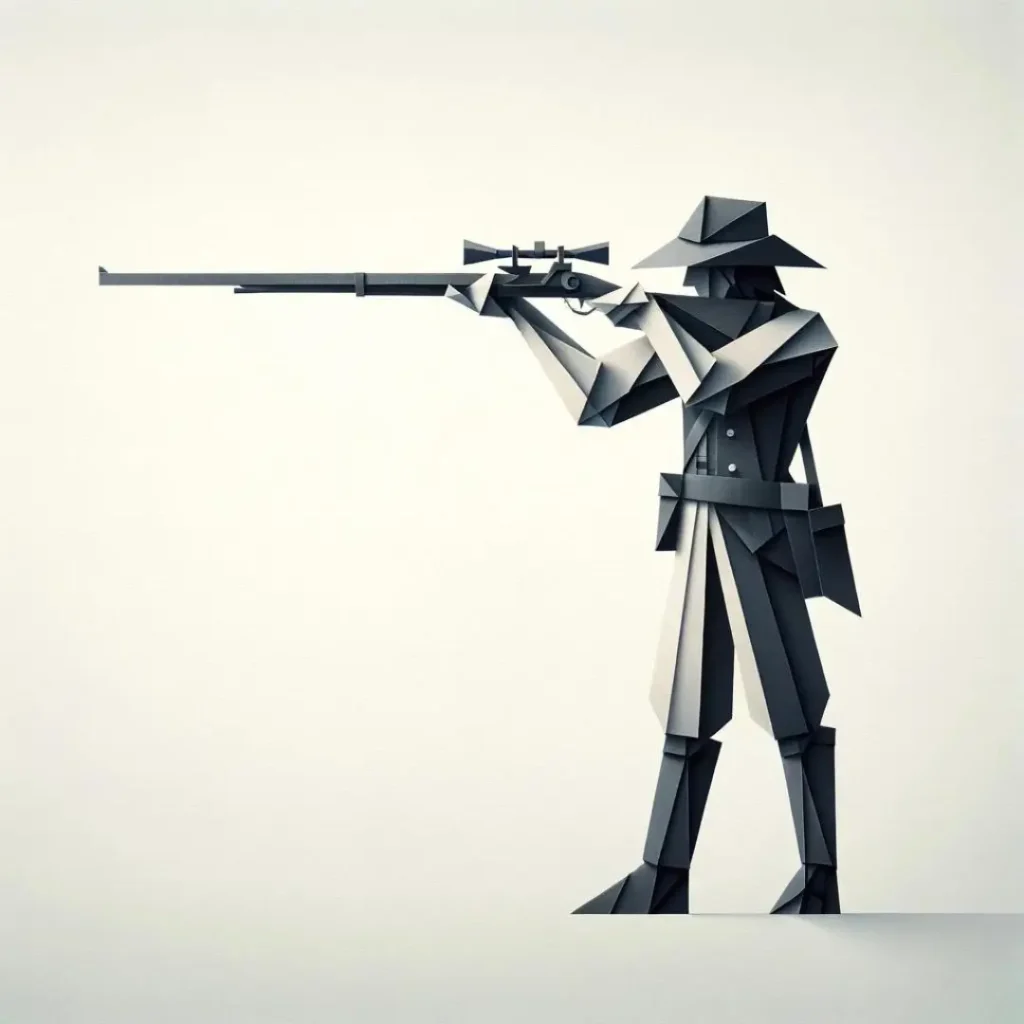
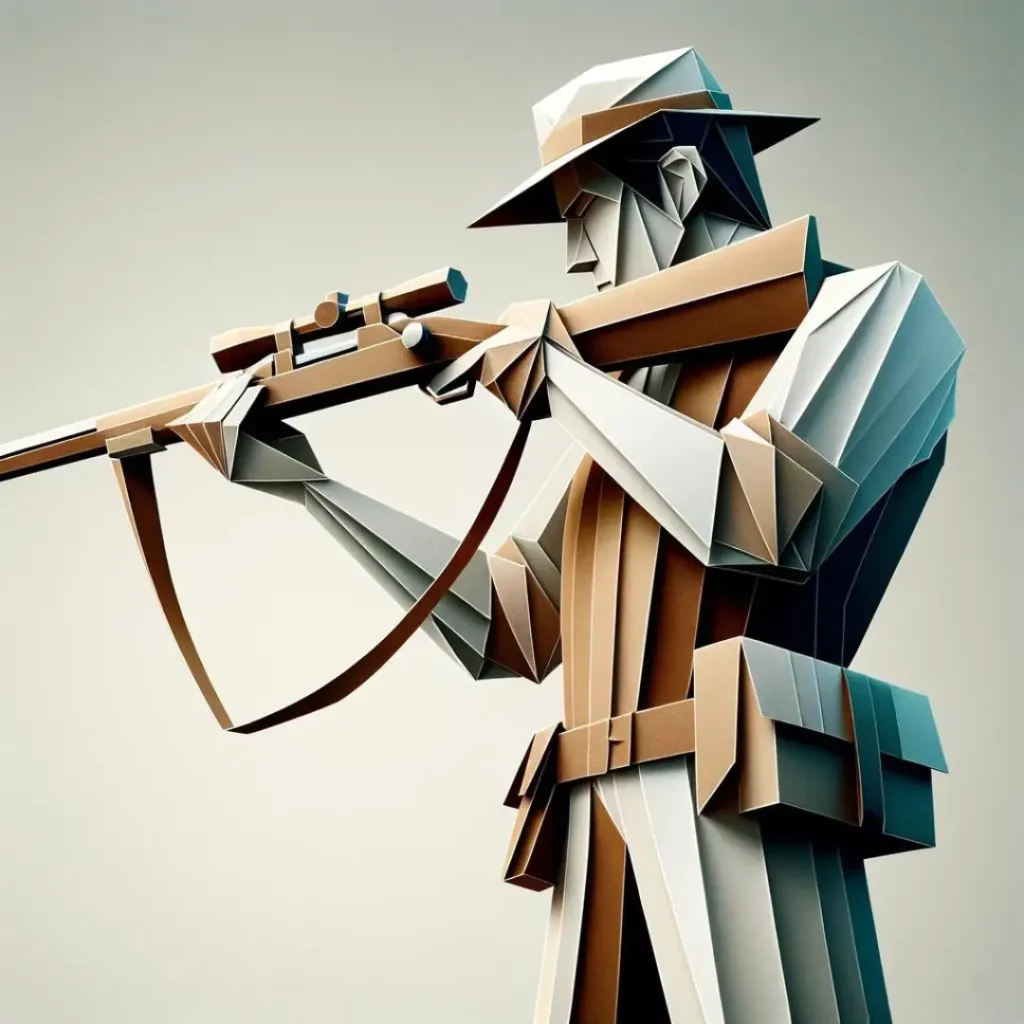

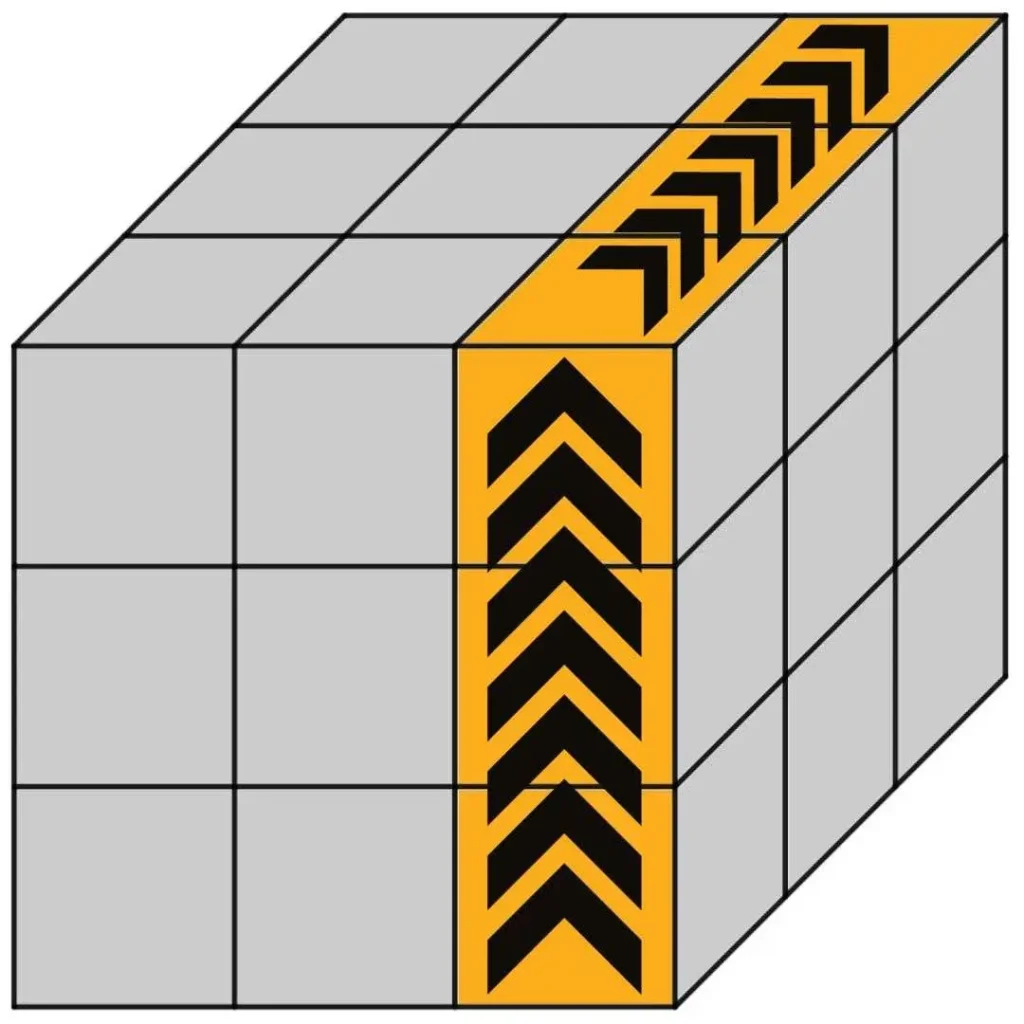
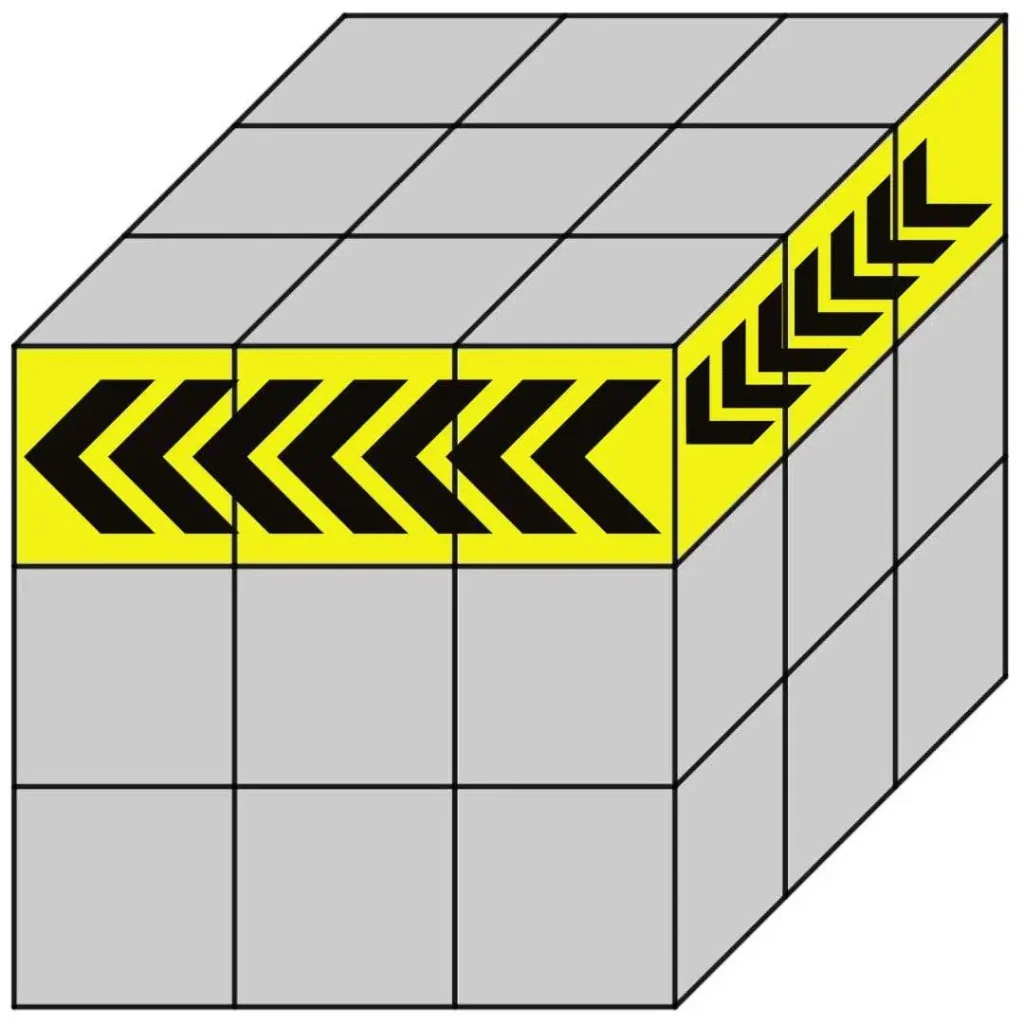
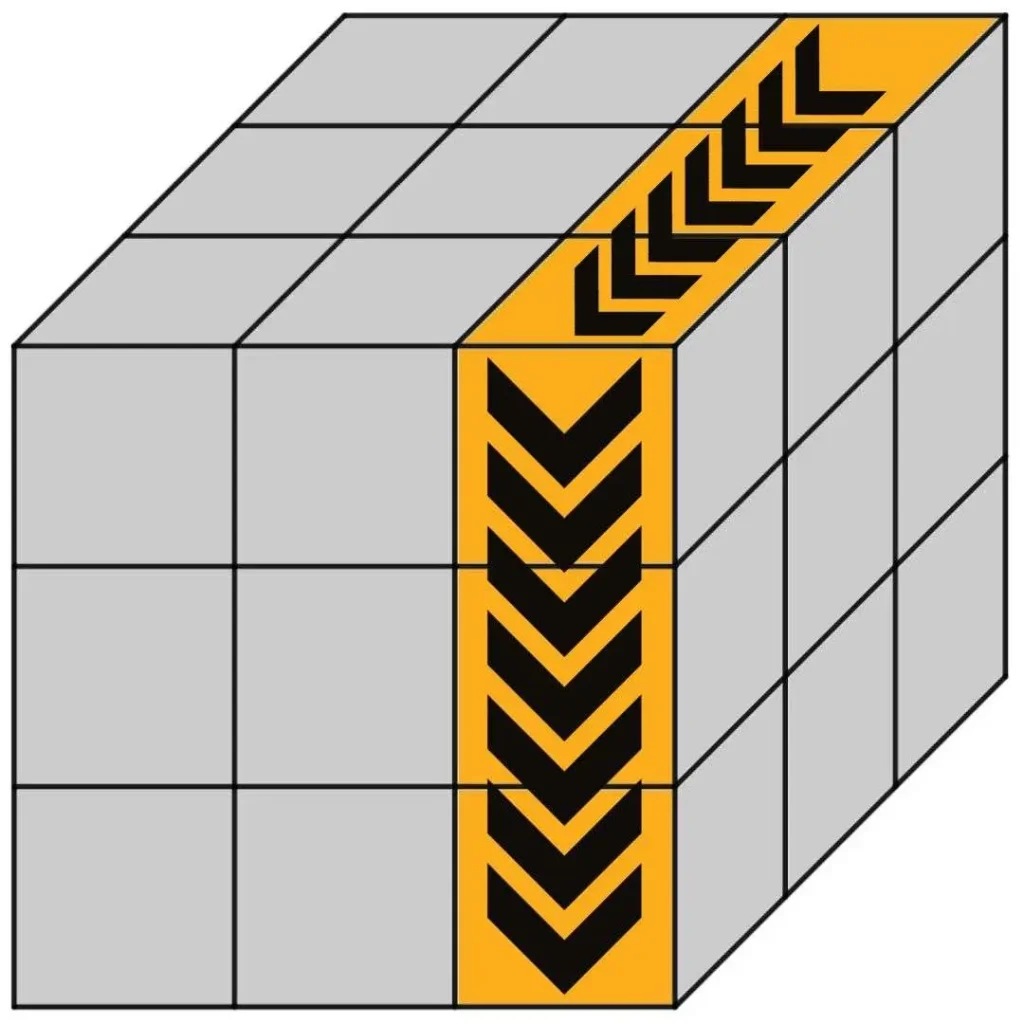
Raise the gun.
Fire the gun.
Lower the gun.
Reload the gun.
When the Bird Looks Right

The hunter turns his head, wondering where the time machine came from.
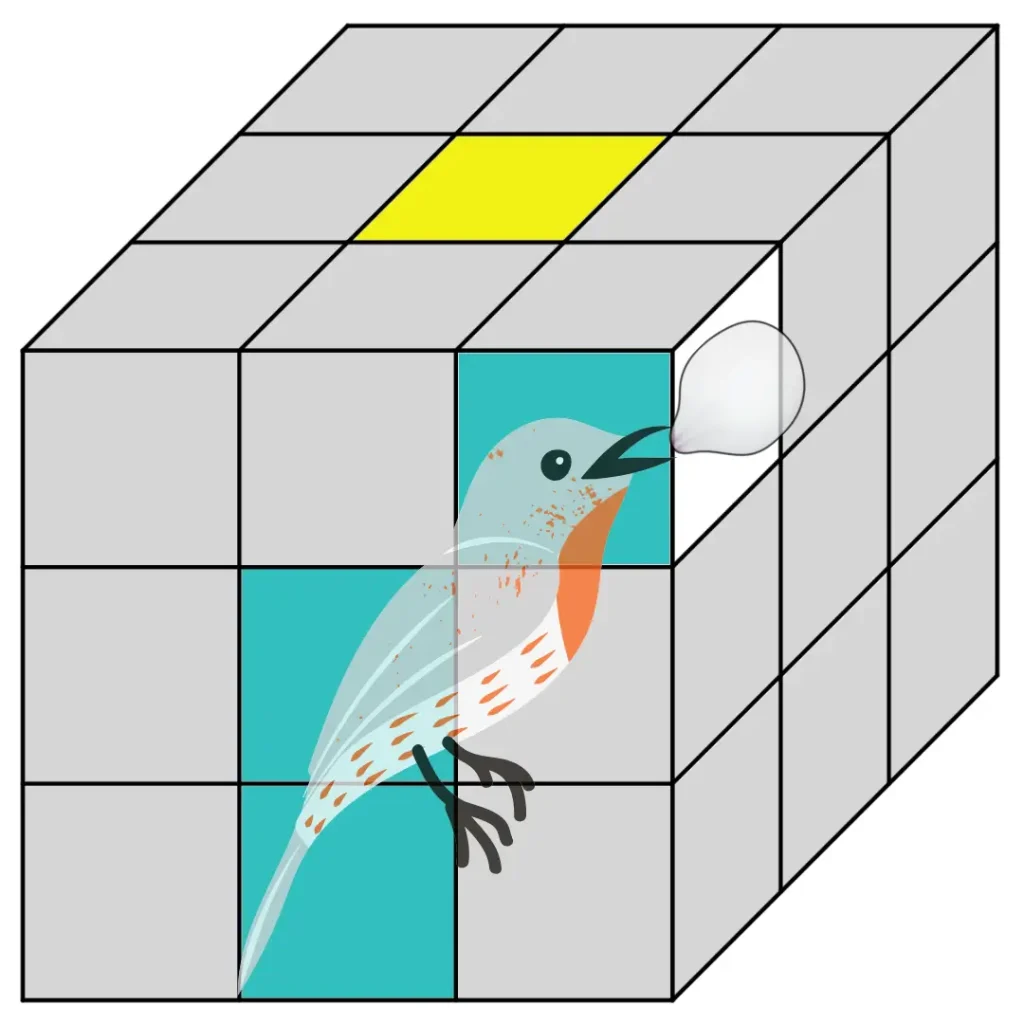
A giant bird carrying a white petal in its beak appears before the hunter.
The hunter uses the right trigger.
4. The Delivery Bunnies
When the Neighbour is to the Right
The hunter decides to look for easier prey – a bunny. He turns his head until he spots a bunny.
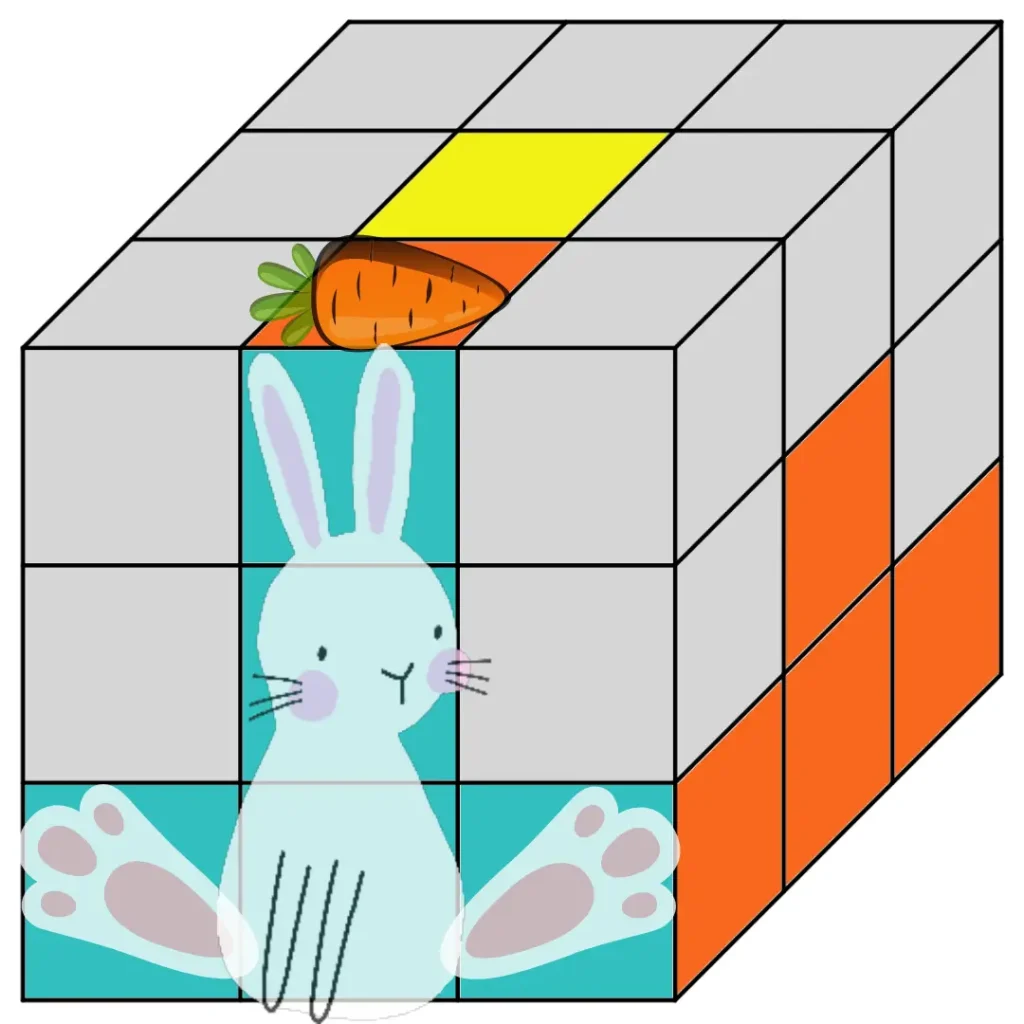
What luck! He spots one of the rare delivery bunnies! He takes note of the colour of the carrot the bunny is carrying on its head. The hunter waits in the corresponding burrow.
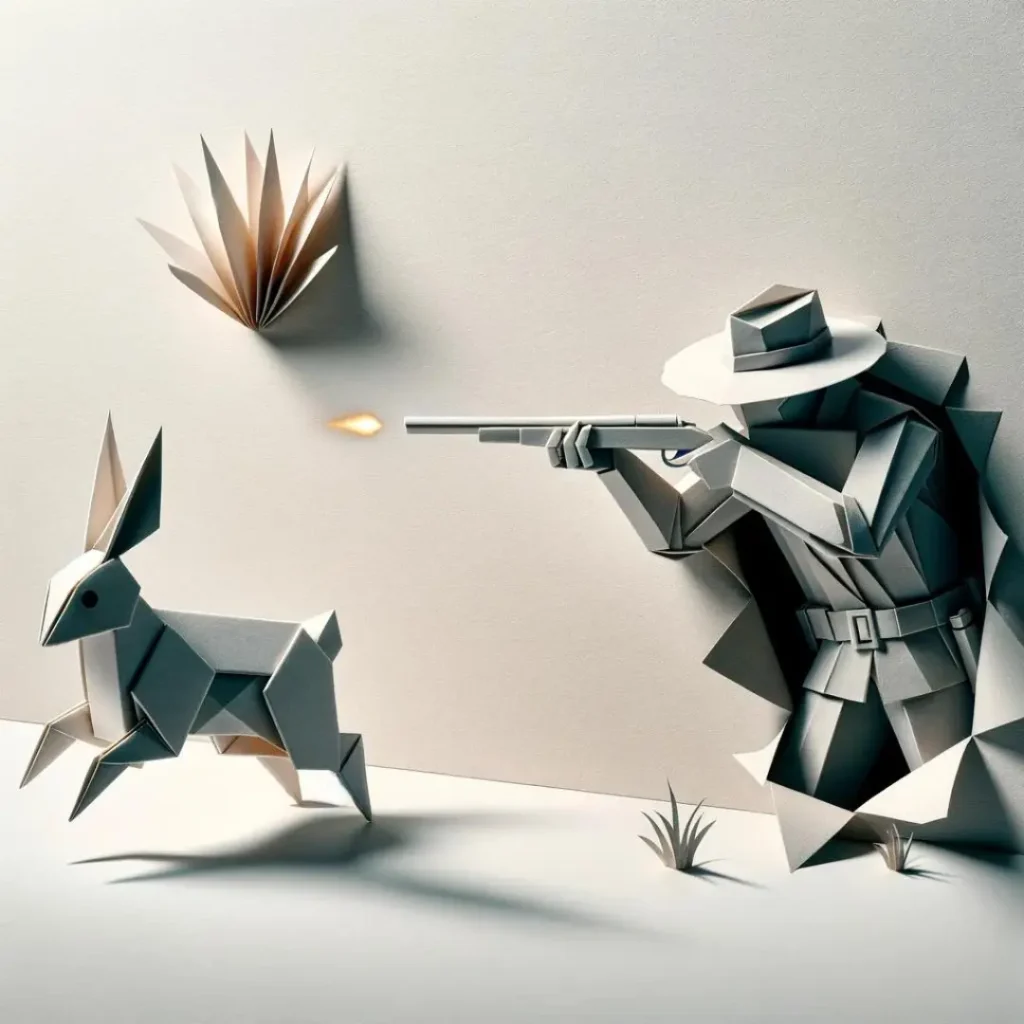
The bunny senses danger and runs away from the burrow in the opposite direction!
The hunter uses the right trigger before he loses his chance.
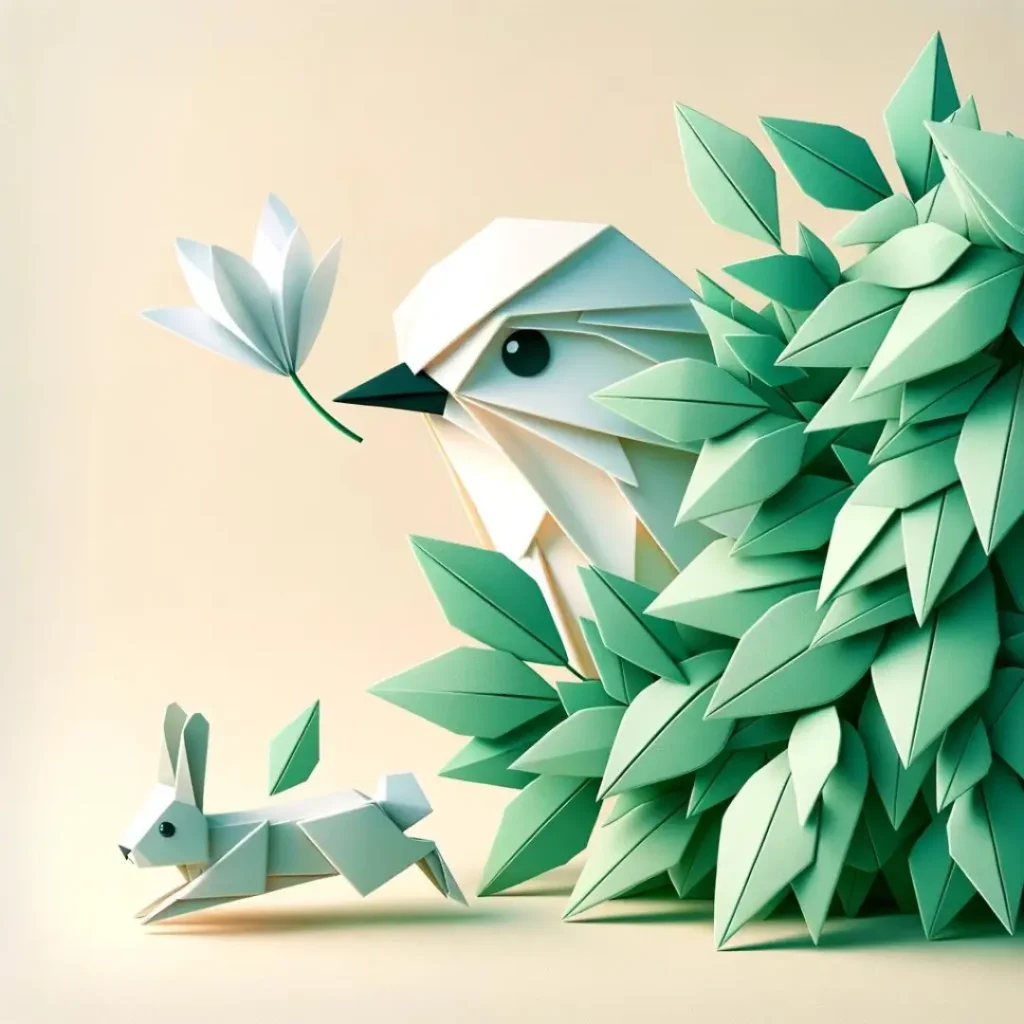

The bird cautiously pokes its head out of hiding.

The giant bird appears before the hunter, facing away from from the burrow.
The bird faces left, the hunter uses the left trigger.
5. The Yellow Cross
The hunter longs for his younger days when he never missed his targets. He decides to do something bold. He jumps in the time machine!
Note that this step is nine moves long but is easy to remember because it is repetitive. If you can remember it easily, you do not have to use a mnemonic to memorise the Rubik’s Cube.
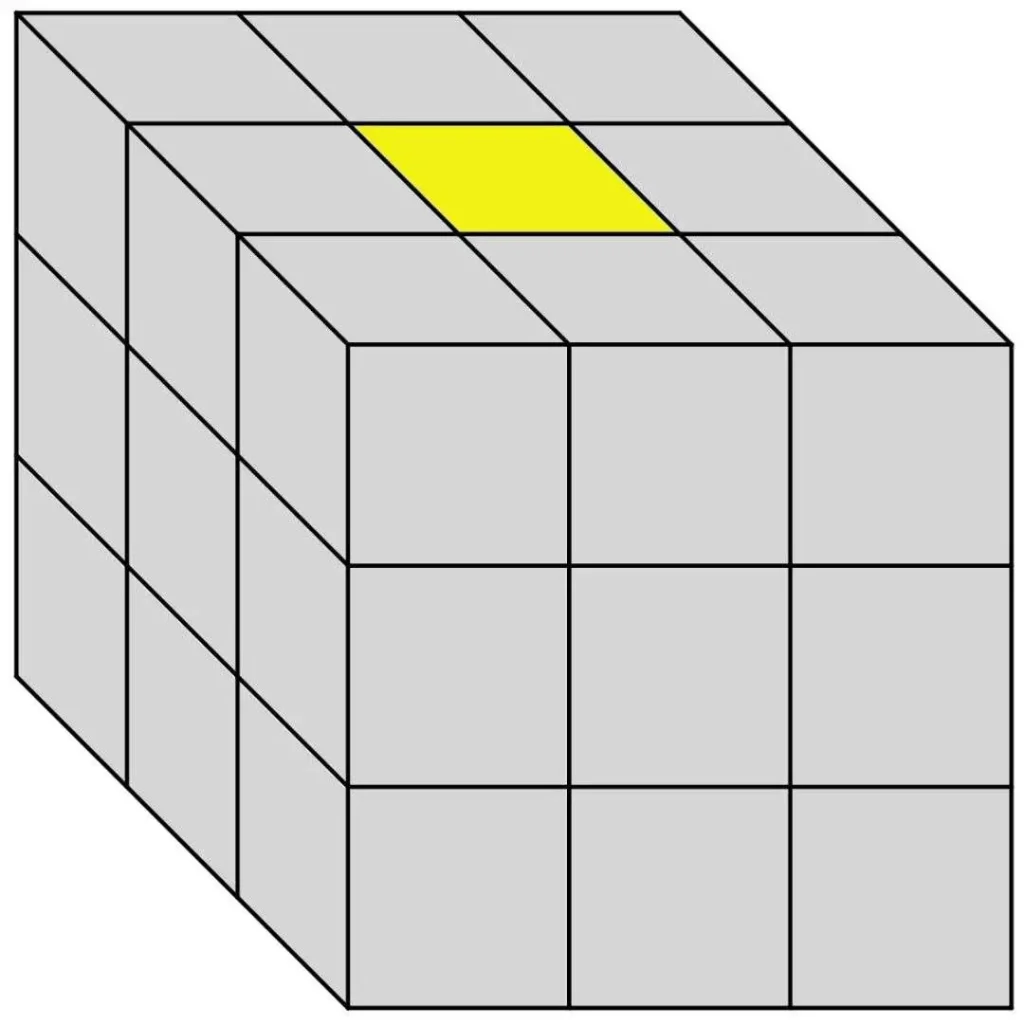

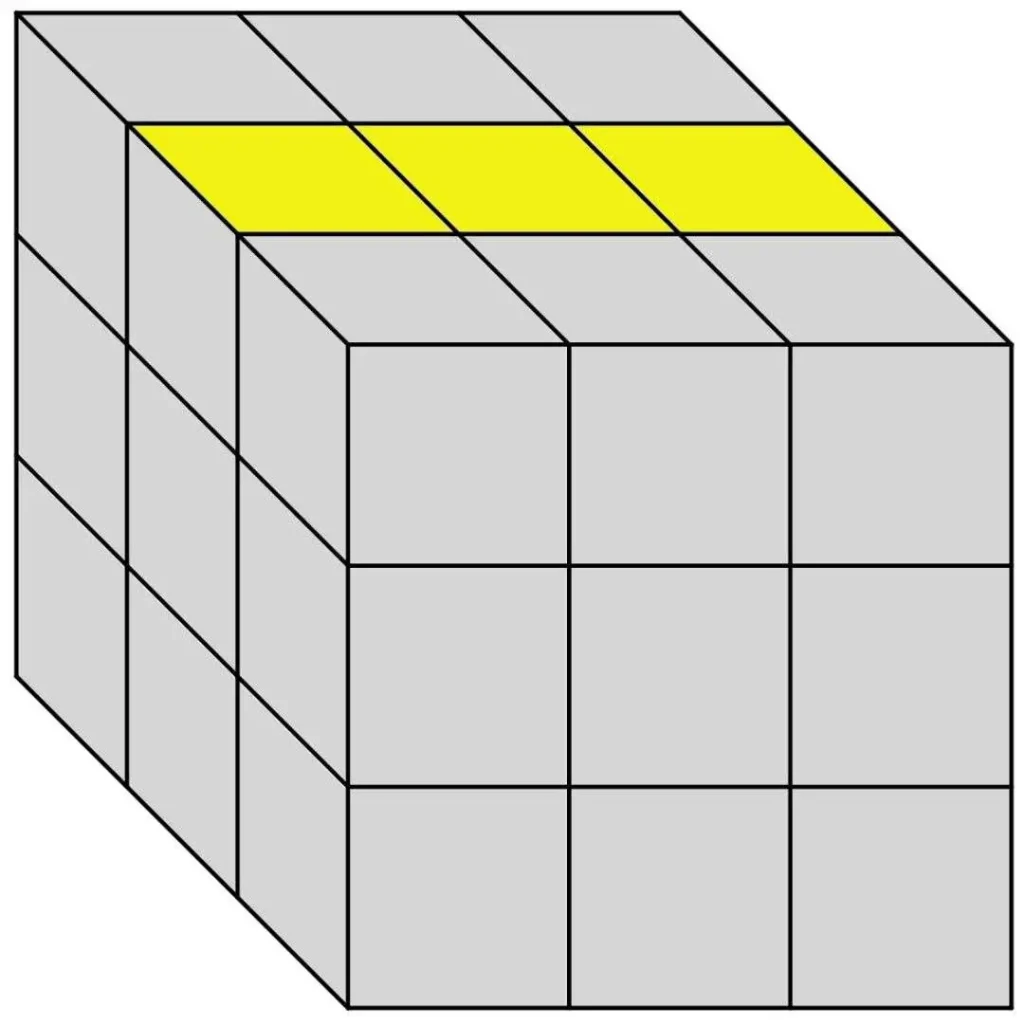
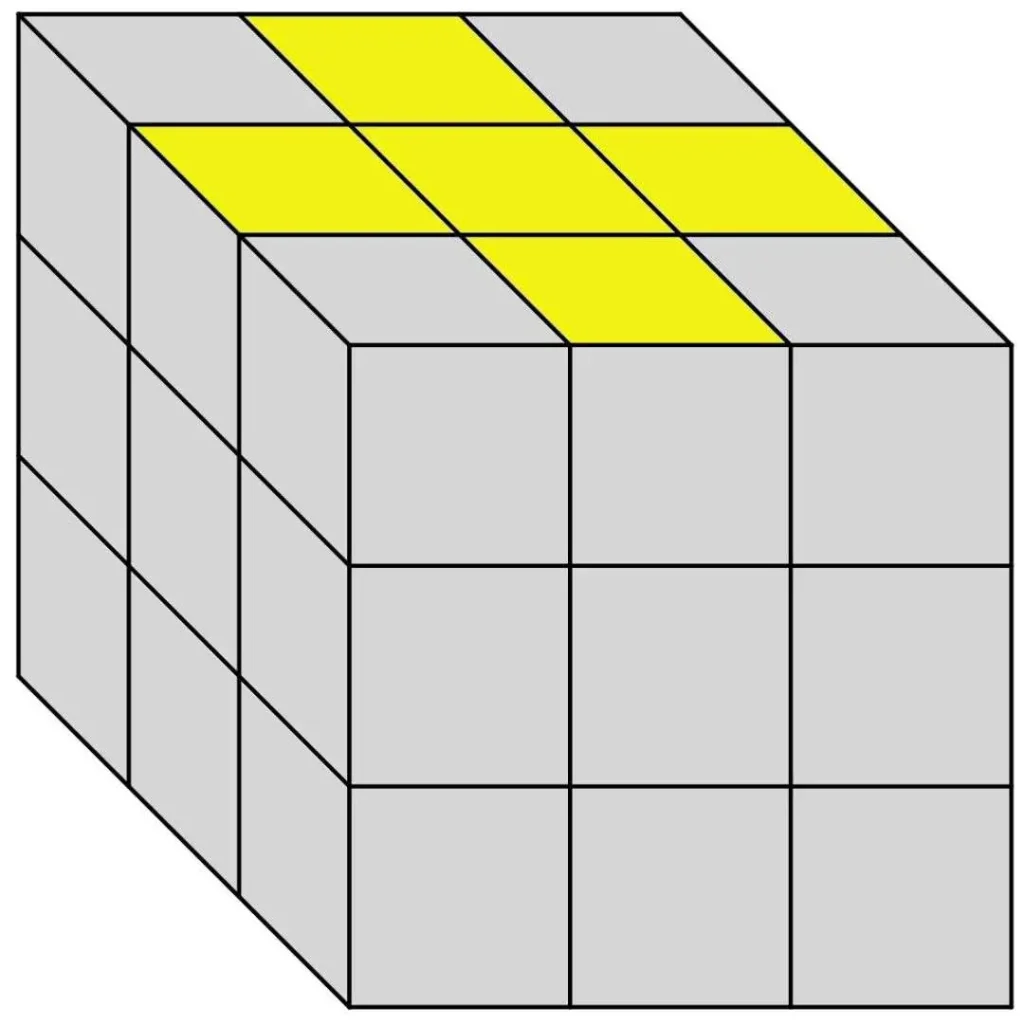
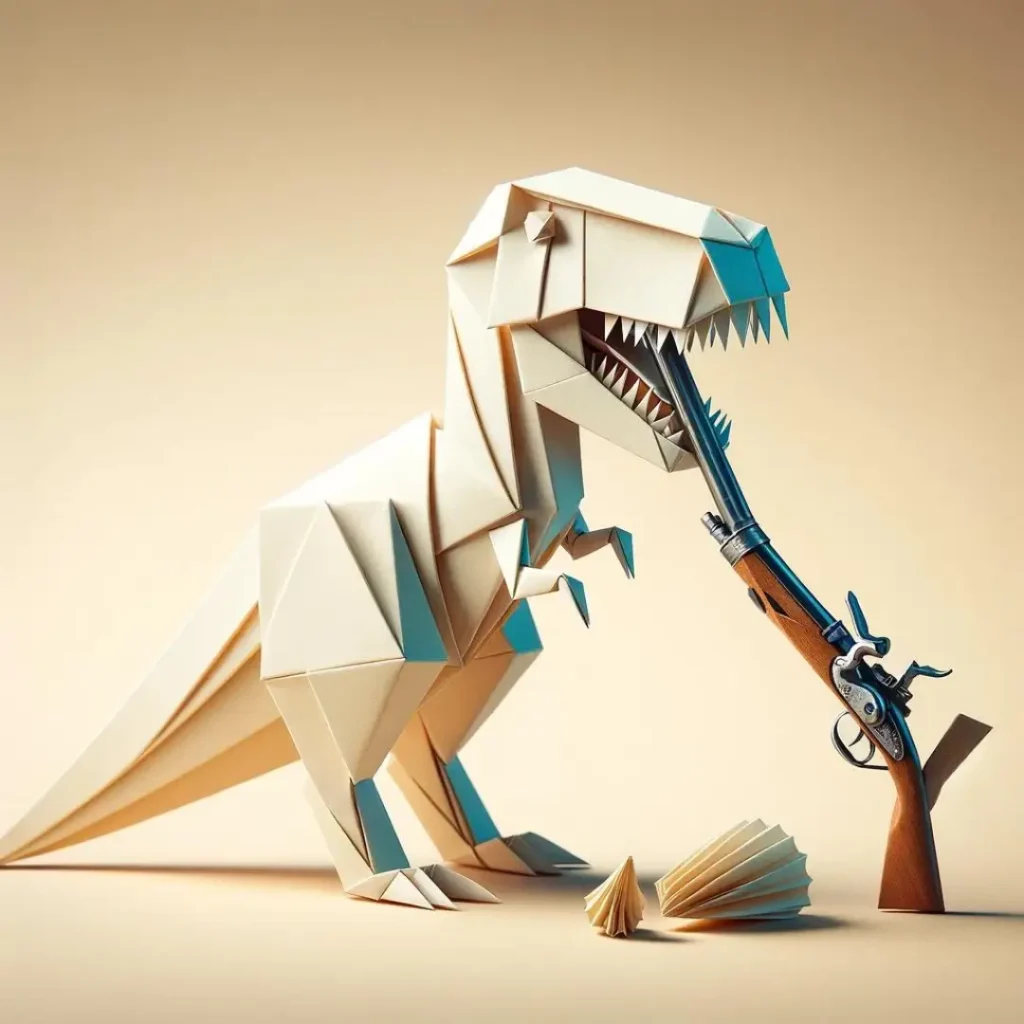

The hunter travels back in time and goes too far! A dinosaur snatches the hunter’s gun from his right hand and eats it. The hunter’s right arm is injured in the process.
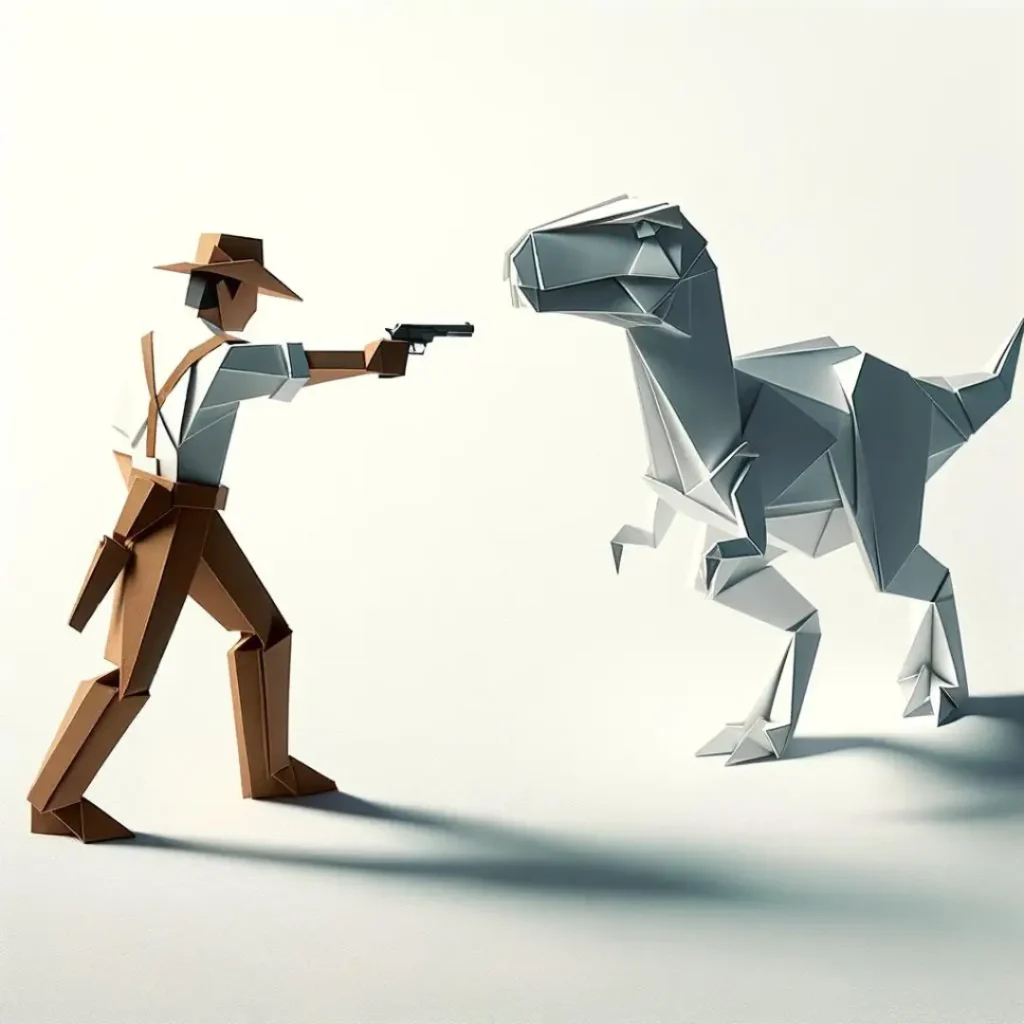
Having lost his gun and the use of his right arm, the hunter is forced to draw his smaller pistol in his left hand. (Perform the left trigger).


The shots are useless against the mighty dinosaur. The time traveller quickly jumps back in the time machine to escape and is transported to the future.
Note the yellow “L” in the corner in phase 2 of making the yellow cross. The left trigger in this part should remind you to look for that “L”.
6. The Switch

The hunter buys a new hunting rifle. He tests it out. The hunter raises the gun.
The hunter fires the gun.
The hunter lowers the gun.
Before he can reload, a shot is fired towards the from the nearby bushes!
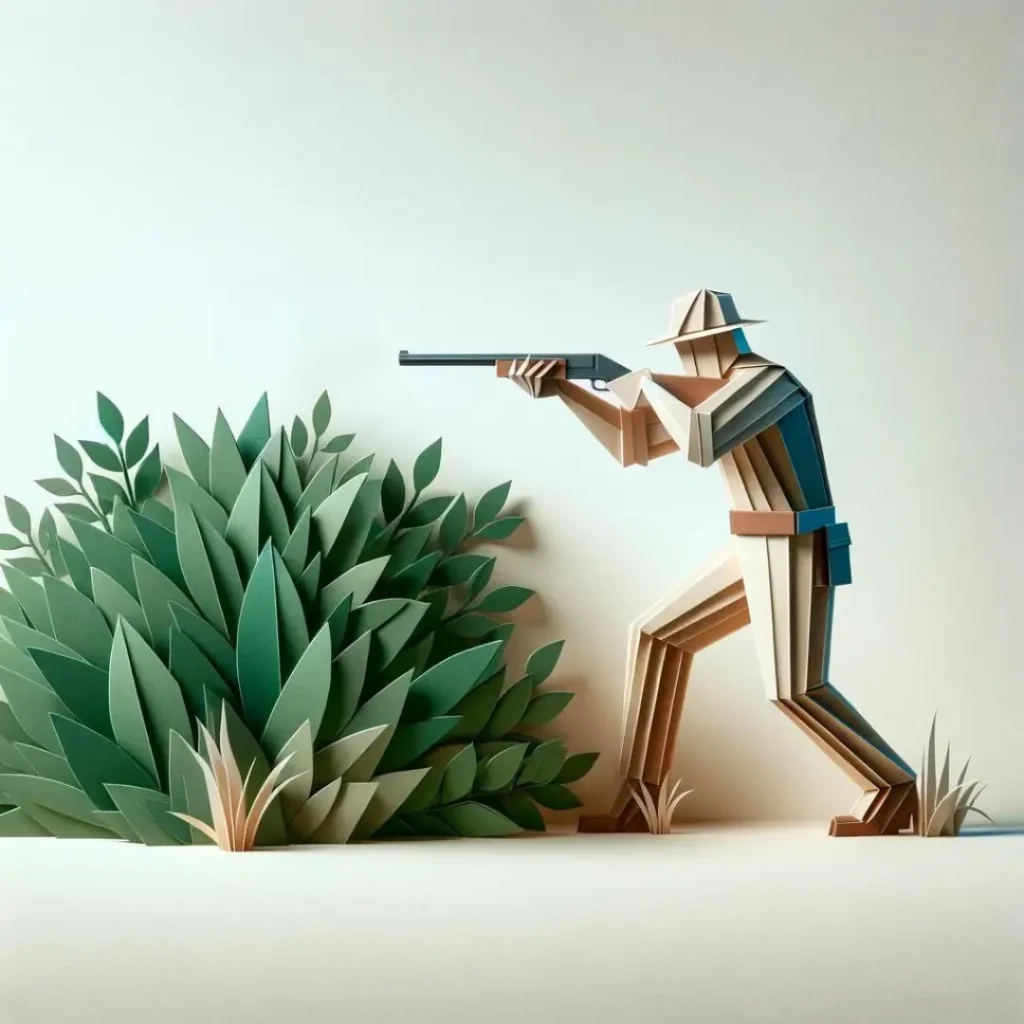
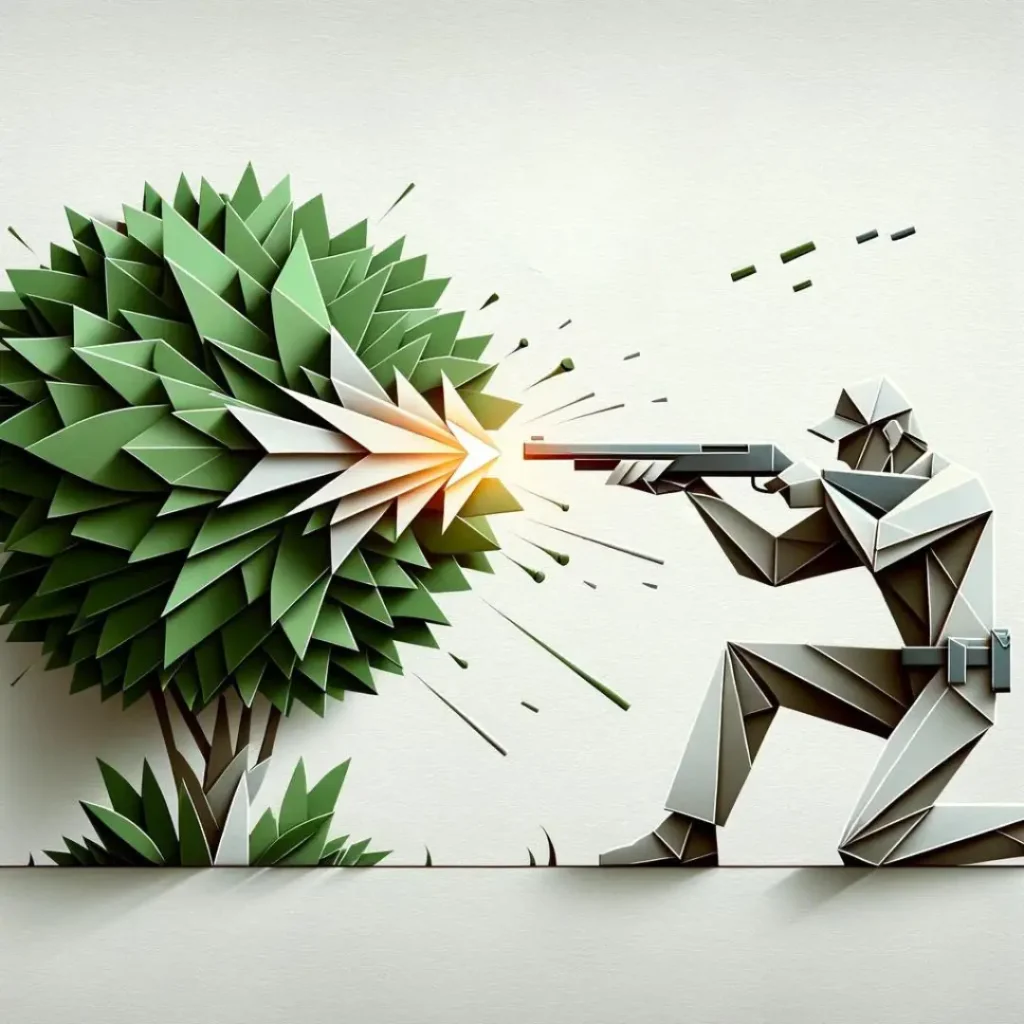
The hunter hunter quickly raises his gunback up and sneaks around to the back of the bushes, ready to strike.
The hunter can’t see whatever is hiding in the bushes, so he fires two shots – BANG! BANG! – just to be sure.
Satisfied he has hit his target, the hunter lowers his gun.
Another shot is fired from some more bushes even further back! Just what is going on here?!
7. The Cycle
The hunter has seen enough. A new and better hunter is out there, ready to take his place. He decides to focus on something he’s always neglected: finding love.
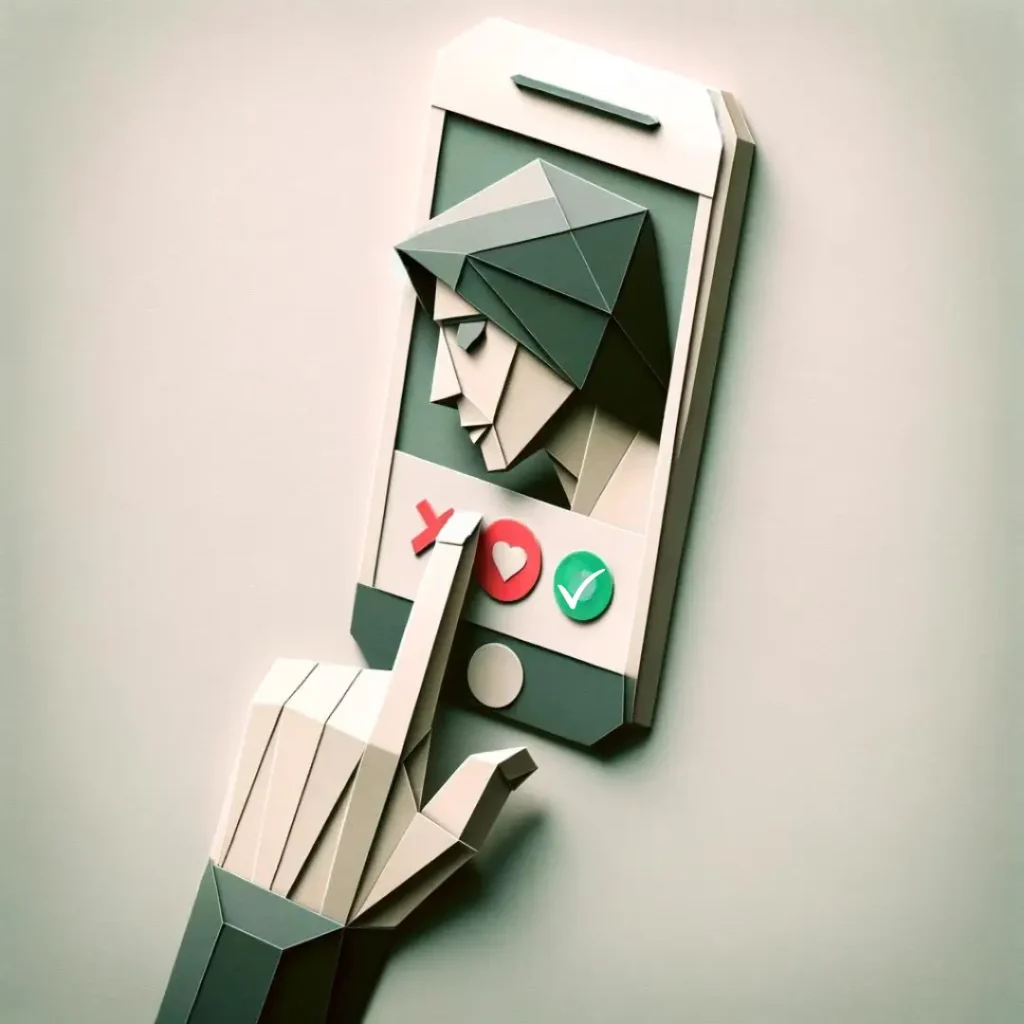


The lonely hunter searches longingly for a partner. He doesn’t find anyone and swipes left.
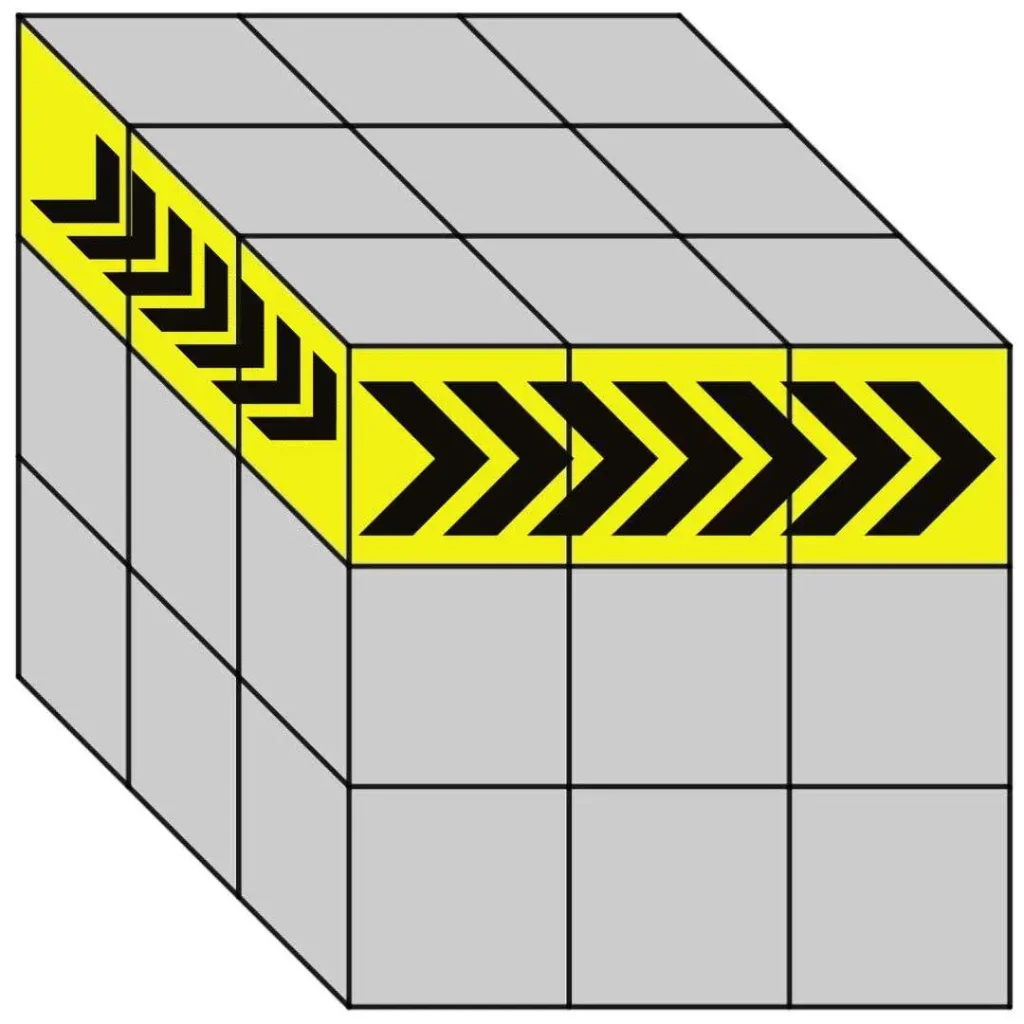
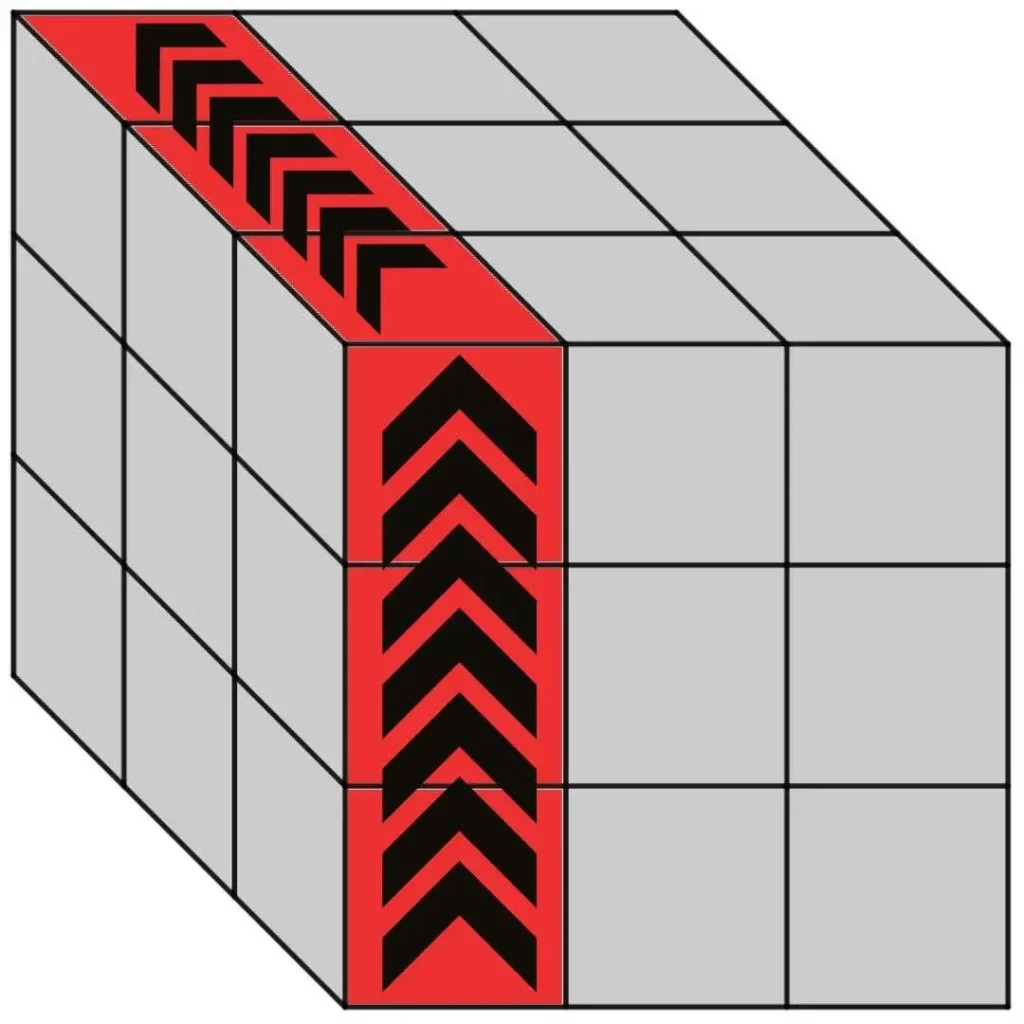
Eventually, he finds a woman that intrigues him. She shares his love of adventure. He (R)eads (U)p on her.
The hunter takes the plunge and swipes right. It’s a match!
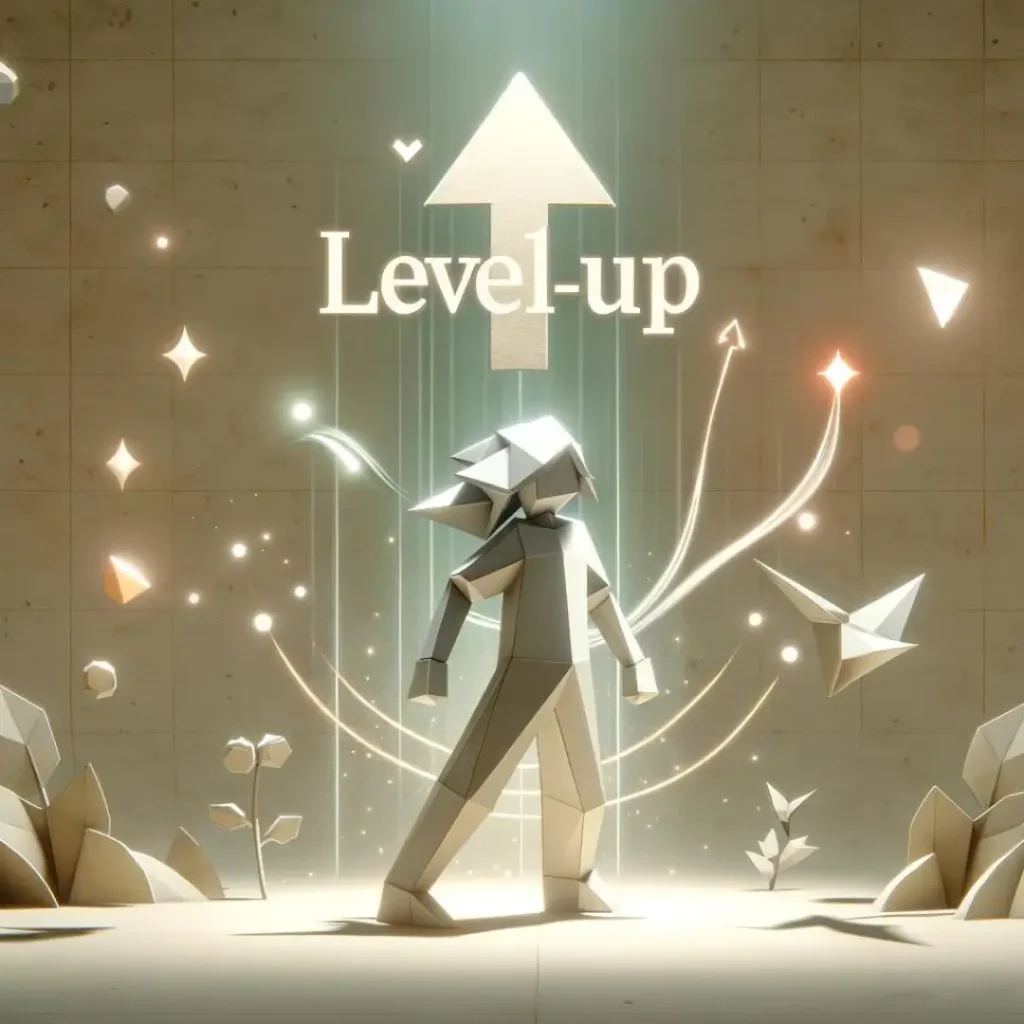
Filled with joy with his love, the hunter (L)evels (U)p and gains new powers.





The hunter grows arrogant and wants to return to hunting. He swipes left on his partner. She begins to fade away, and he immediately regrets his actions.
Filled with guilt, the hunter writes down his thoughts in his journal, trying to make sense of what has happened.
Desperate to get his love back, he swipes right once more. But she is gone. The harder he tries, the more her face fades from his memory…
Tired and old, the hunter (L)ies (D)own for the night against the starry night sky.
8. The Shooting Gallery


The hunter wakes up not long after in a hot sweat. He looks up and sees a full moon high in the night sky (turn the cube upside down so the white face – the moon – is on top).


The hunter reaches into his right pocketto find the daisy that started this whole adventure. His frustration hits its limit when he finds the daisy is broken. (Hold the cube so that the piece in the near-right bottom corner is wrong).

Right Triggers
He points his gun up at the moon and fires repeated right triggers to release his frustration. He suddenly stops when he sees the broken daisy has fixed itself!
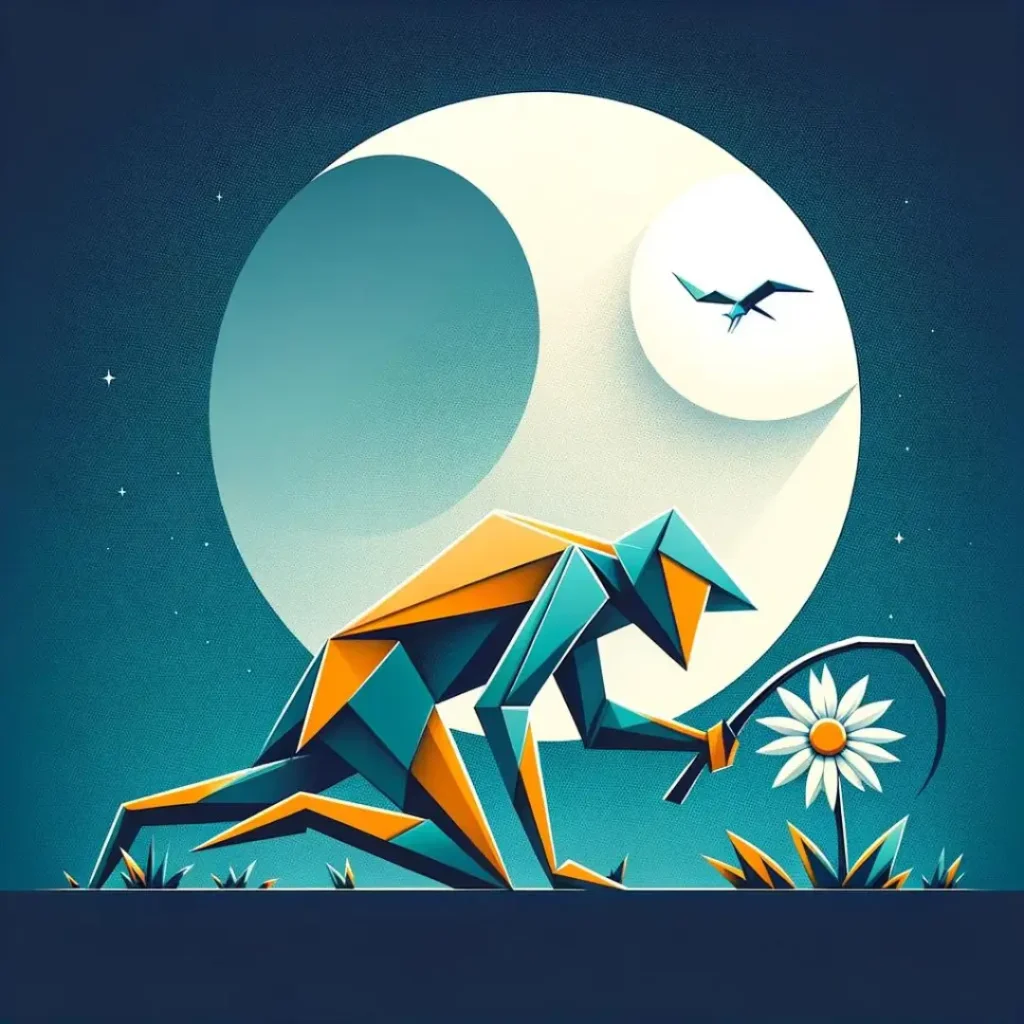

Excited to test it again, he gets on all fours and turns around looking for another daisy on the ground. (Turn the bottom face until another wrong piece is in the near-right corner). He repeats the process as many times as he can until he suddenly has a moment of clarity. (Repeat until the yellow face is complete). The final turn is obvious.
For an example, please look at our article How to Solve the Rubik’s Cube.
Conclusion
Congratulations on learning how to memorise the Rubik’s Cube! This accomplishment is not about solving the puzzle but enjoying the challenge! The world of Rubik’s Cubes is vast, offering endless methods and challenges to explore.
As you look for your next challenge, consider diving into the strategic world of chess. Our guides, including Learn the Royal Game of Chess, are here to help you on your journey.
FAQ
How long does it take to memorise a Rubik’s Cube?
You can memorise key patterns and algorithms in a few hours with practice, but speed and mastery come with time.
Do I need to use the story from the article?
It’s essential to use a story you can remember! You can edit the story from the article or write an entirely new one.
What is the best method to memorise Rubik’s Cube algorithms?
Chunking techniques or associating moves with visual or verbal cues can help make algorithms easier to remember.
What are common mistakes when memorising Rubik’s Cube algorithms?
Yes, repetition and mnemonic devices can improve your recall and speed in solving the cube.
How do memory techniques for the Rubik’s Cube improve cognitive skills?
They improve problem-solving, spatial reasoning, and memory retention, which can transfer to other cognitive tasks.
