
Introduction
Few mental feats can match the awe inspired when you memorise a deck of cards. Imagine sifting through 52 cards and recalling each from memory in their exact order. Sounds challenging. I’m here to prove that memorising a deck of cards is far more attainable than most people think.
Many board games involve a deck of cards and a discard pile. Consider your favourite game. Imagine the advantage you could gain if you could remember every card in the discard pile. This article will concentrate on memorising a standard deck of 52 cards. Remember, though, these techniques are adaptable to all deck-based games.
By applying the method I’m about to share, I memorised a deck of cards with perfect accuracy on my initial try. That first attempt took me about 26 minutes (for memorisation and recall). Don’t worry, though! Though your initial effort may be slow, your speed improves with practice. With some work, your memorisation time will soon be below five minutes. Did you know the world’s top mental athletes can memorise a deck of cards in roughly 20 seconds?
This guide will equip you with the necessary tools to memorise your first deck of cards. Soon, you’ll have an impressive party trick to amaze friends and family.
Table of Contents
Memory Techniques to Memorise a Deck of Cards
Mastering how to memorise a deck of cards involves two essential components. First, we need a mind palace – a familiar space filled with recognisable items. Second, we need a system to transform cards into objects. These card objects interact with the mind palace items in unforgettable ways, making it easier to recall the cards in the correct order later. Soon, we will see an example to guide you through this process.
The Mind Palace
It is crucial to select a personal and familiar location for your mind palace. One of my mind palaces is the street where I grew up. I use that mind palace to remember the dates of historical events from the 19th century!
The example here will help you craft your mind palace for memorising a deck of cards.
Consider this child’s bedroom with five key objects.
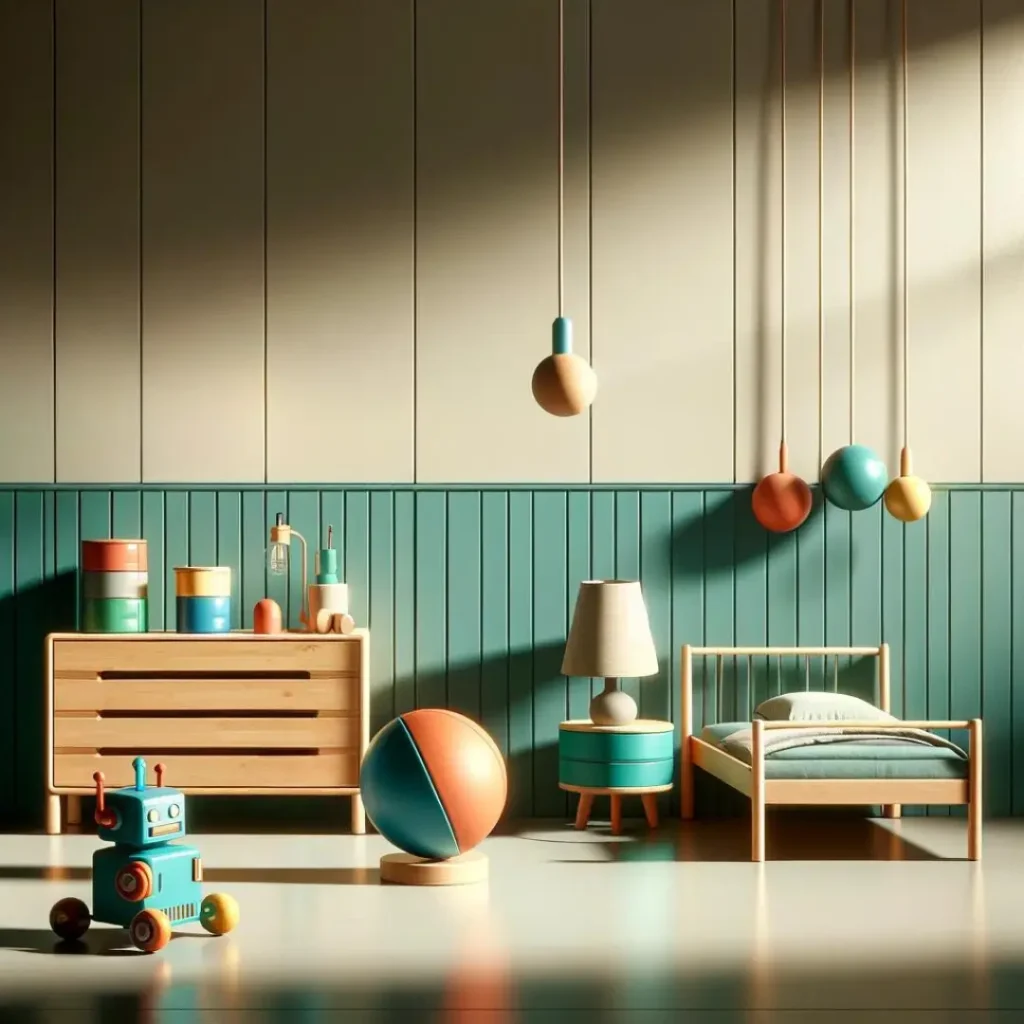
- Toy robot
- Chest of drawers
- Ball
- Bedside lamp
- Bed
Your task is simple: look at the picture, then close your eyes and recall these objects in the correct order. This exercise underscores three critical points:
- Your mind palace will be familiar to you, making visualising objects (or loci) within it easy.
- Our brains are adept at remembering visual information. Turning our cards into images uses our brains’ superpower to our advantage.
- This method is scalable for memorising vast amounts of information. People have used mind palaces to remember thousands of decimal places of pi.
Your job is simple. Look at the picture, then close your eyes and recall the five objects.
The Major System and the Number Cards
The major system is an effective tool for converting numbers into objects. This system transforms digits into letters that then form words. The letters chosen are based on the sound or appearance of the numbers.
There are no rules on which version of the major system you should use. The important thing is it makes sense to you. Here is my major system for memorising cards (with explanations). Notice how I don’t bother with the numbers 0 and 1.
- 2 – n (there are two vertical lines in an ‘n’)
- 3 – m (there are three vertical lines in an ‘m’)
- 4 – r (sounds like the end of the word ‘four’)
- 5 – f/v (the letters ‘f’ and ‘v’ have very similar sounds, and both appear in the word ‘five’)
- 6 – sh (by layering the letters ‘s’ and ‘h’ on top of each other, the appearance is like a ‘6’)
- 7 – T (a capital ‘T’ looks like a ‘7’. Also, the Chinese character for seven (qī) looks like a lowercase ‘t’)
- 8 – B (an ‘8’ looks like a capital ‘B’)
- 9 – g (a ‘9’ looks like a lowercase ‘g’)
- 10 – lo (a ’10’ looks like a lowercase ‘l’ followed by an ‘o’
Feel free to experiment with different letters here. My system is not the most popular; you can explore other versions here.
The final step is associating a consonant sound with the four suits. They are:
- Clubs – K (the first letter of ‘Clubs’ is a ‘k’ sound
- Hearts – R (it does not matter that we also use ‘r’ for ‘four’ in the major system. You will see why soon)
- Spades – S
- Diamonds – D
Now, we combine these consonants to create words.
First, we cover the values 2, 3, 4, 5, 6, 7, 8, 9, and 10. We will discuss the cards A, J, Q, and K later.
Example
The Memorisation Phase
Below are ten random cards and their corresponding objects.
- 8 Hearts: “B” – “R”
- BEAR
- 7 Hearts: “T” – “R”
- TYRE
- 10 Clubs: “lo” – “K”
- LOCK
- 3 Clubs: “m” – “K”
- MICKEY
- 9 Clubs: “g” – “K”
- GECKO
- 4 Diamonds: “r” – “D”
- RADIO
- 4 Clubs: “r” – “K”
- ROCK
- 8 Spades: “B” – “S”
- BASS
- 3 Spades: “m” – “S”
- MOOSE
- 8 Clubs: “B” – “K”
- BOOK
Next, we group those ten objects into five pairs and associate each with an item from the mind palace. Let’s see how this is done!
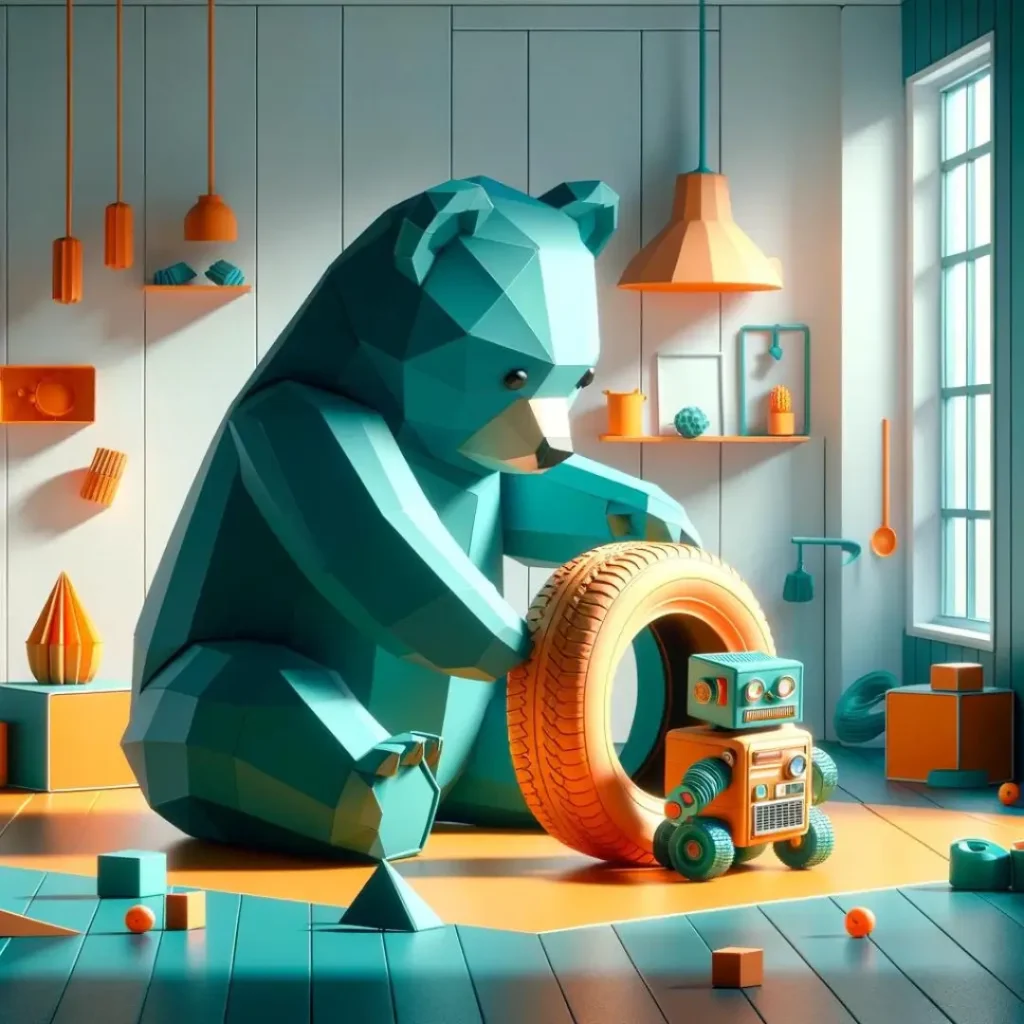
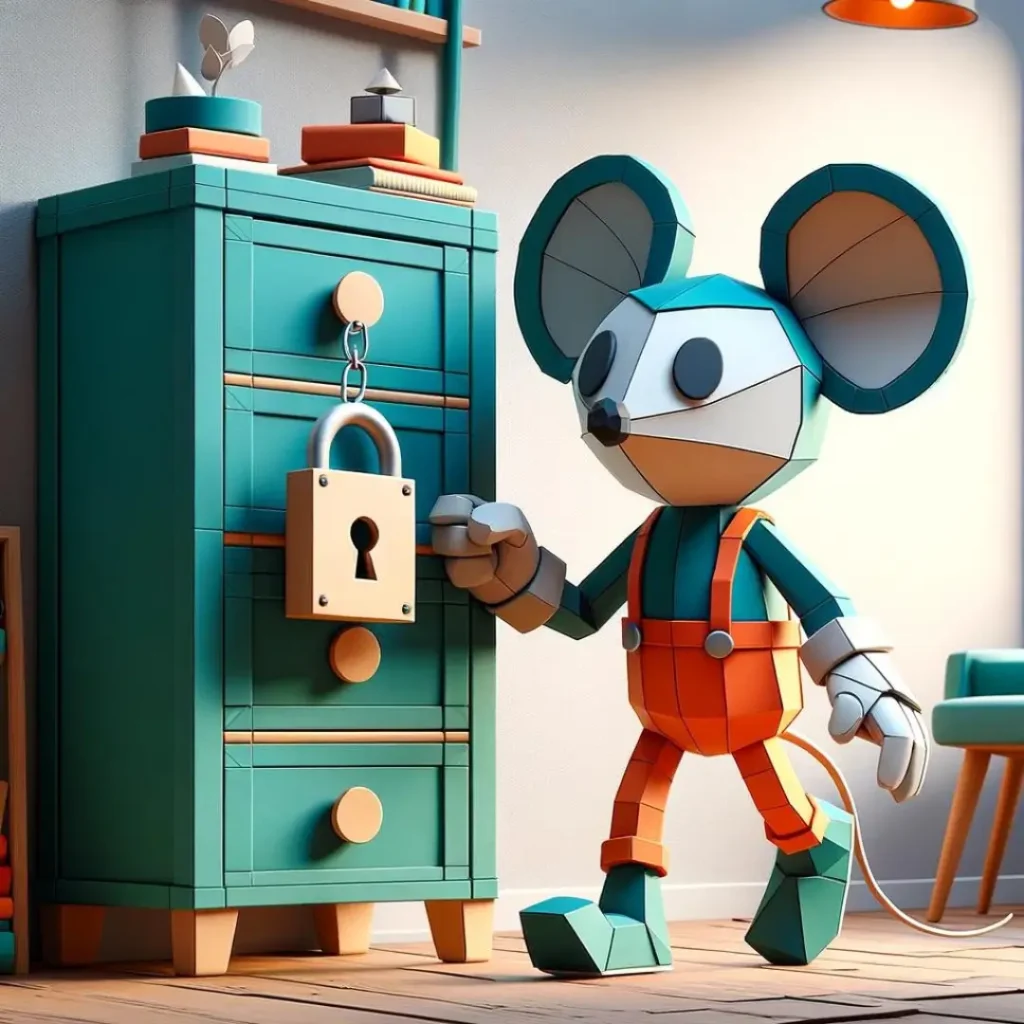
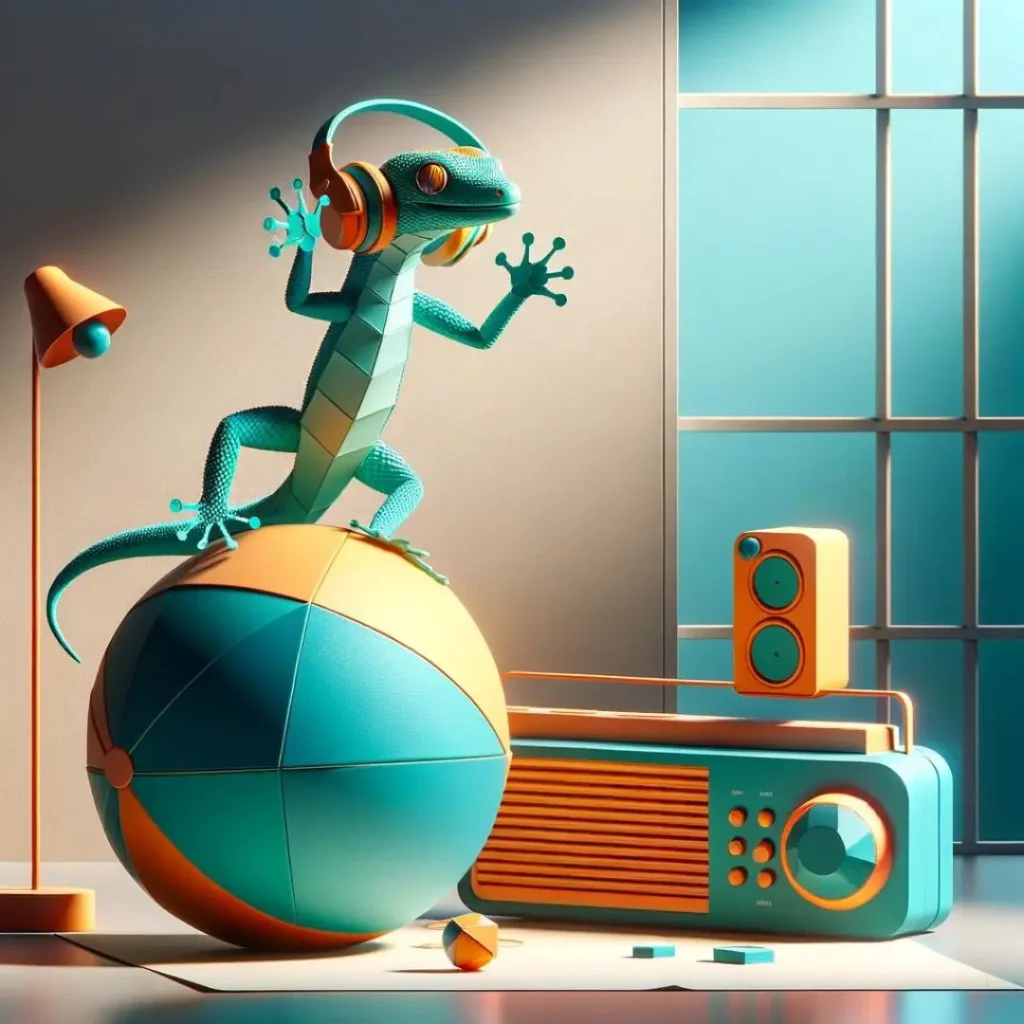
The Recall Phase
The great thing about the images above is how weird they are. You don’t have to try to remember them; you just will!
Visualise the five loci from the mind palace in order and decode the objects you see.
Toy Robot
- You see the robot picked up by a BEAR. The BEAR starts with a ‘B’, which looks like an 8. It ends with an ‘R’ sound, which represents Hearts. So the first card must have been the 8 of Hearts. There is no danger of confusing the ‘R’ for four and the ‘R’ for Hearts. An ‘R’ at the beginning of a word represents the number, and one at the end means the suit.
- The bear stuffs the robot into a TYRE. The TYRE starts with a ‘T’ that looks like a 7. The ‘R’ sound represents Hearts, so our second card must be the 7 of Hearts.
Chest of Drawers
- You see a big LOCK on the front of the chest of drawers. The letters ‘lo’ look like a 10, and the ‘K’ sound represents Clubs. So we have the 10 of Clubs.
- You see MICKEY coming to open the lock. The ‘m’ has three vertical lines, and the ‘K’ sound represents Clubs. So we have the 3 of Clubs.
Ball
- You see a GECKO standing on the ball. The ‘g’ looks like a 9, and the ‘K’ is for Clubs. We have the 9 of Clubs.
- The gecko has her headphones on and is listening to the RADIO. The ‘R’ is at the start of the word and so represents a 4. The ‘D’ sound is for Diamonds. We have the 4 of Diamonds.
Lamp
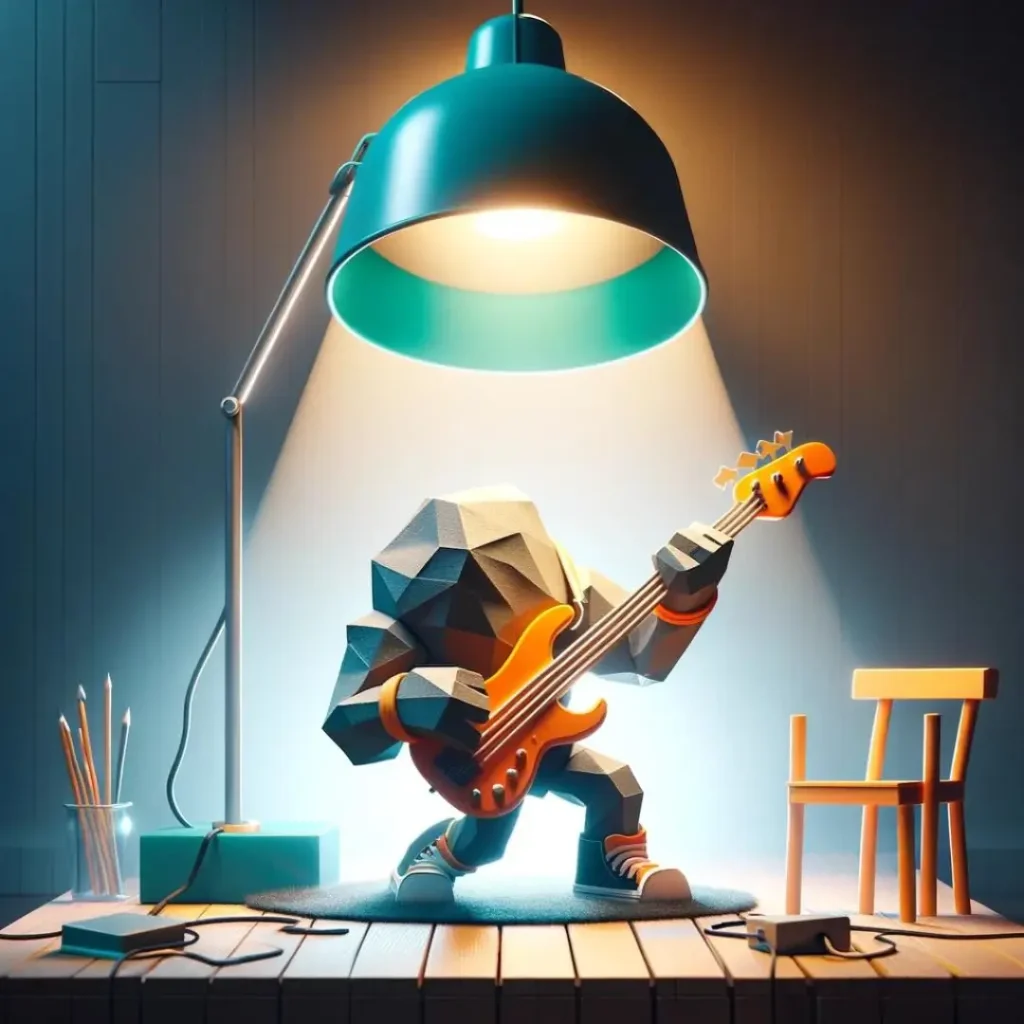
- A ROCK is standing under the lamp. ‘R’ plus ‘K’ gives us the 4 of Clubs.
- The rock is playing his BASS guitar. ‘B’ plus ‘S’ gives us the 8 of Spades.
Bed
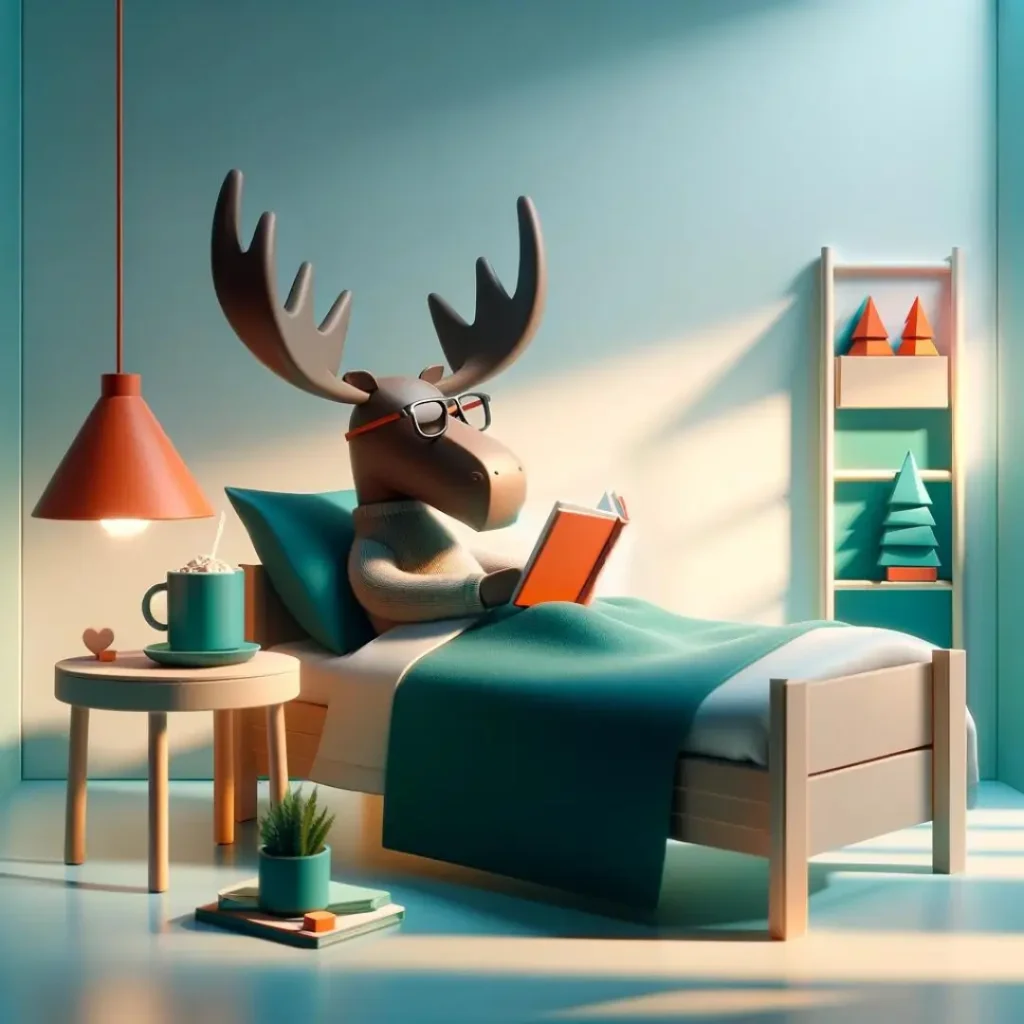
- A MOOSE is lying in the bed. ‘M’ plus ‘S’ gives us the 3 of Spades.
- The moose is reading a BOOK. ‘B’ plus ‘K’ gives us the 8 of Clubs.
And there you have it! You can now recall ten random cards with no effort at all! Isn’t it amazing how the images stay in your mind?
The Major System and the Face Cards
Unlike number cards, we memorise face cards (including the Aces) using associations with people. This method doesn’t rely on the major system but is also effective. Here are some rules I use to choose my people.
- The Jack is a young boy.
- The Queen is a woman.
- The King is a man.
- The Ace is a mythical figure.
Each of the suits represents a different category:
- Hearts are family.
- Clubs are sports stars.
- Diamonds are wealthy people.
- Spades are rock stars.
For example, for Hearts, I have:
- Jack of Hearts – my brother.
- Queen of Hearts – my mom.
- King of Hearts – my dad.
- Ace of Hearts – Cupid.
Try to make your own characters for the face cards!
Some Tips
Mind Palace – You will need a mind palace with 26 objects.
- Try using five rooms of your house and five loci from each room (and an extra one from the last room).
- There should be a natural order in which you imagine yourself moving through the rooms.
Reset – It’s vital to reset your mind palace to avoid confusion when memorising a deck of cards next.
- I go through and mutilate the existing objects in my mind palace before starting again.
- For example, you can imagine the Moose falling out of bed and crashing through the floor, disappearing. This way, the bed loci will be reset and ready for the next time you want to memorise a deck.
Objects – Spend time creating a personal list of objects associated with each card.
- Write a personalised list of objects for all 52 cards.
- I have not included my own list, as it is personal to me and contains many names of people I know. However, making your own list will help you remember it better.
Start Simple – Begin with a smaller set of cards to build your confidence.
Take Your Time – Your first full deck will not be fast. After a few tries, however, you will be amazed by how quickly you can do it.
Conclusion
Congratulations on starting your journey to memorise a deck of cards. Achieving this milestone marks one of the most remarkable feats of memory. It illustrates more than a party trick. It represents a profound enhancement of your mental capabilities.
The journey to memorise a deck of cards might seem daunting at first. However, it becomes possible and enjoyable with the proper techniques and a bit of practice. This skill is a testament to the power of the human mind, opening doors to memorising far more than cards.
Consider delving into other areas of memory mastery. Our article How to Memorise the Rubik’s Cube offers another exciting memory challenge. The principles of memorisation you have learned work in any field. With the right approach, the limits of your memory are bound only by the effort you’re willing to invest.
Again, congratulations on memorising a deck of cards. This achievement is the beginning of what you can do with the proper dedication and strategy. Keep challenging yourself and continue to explore your mind’s vast potential.
FAQ
How long does it take to memorise a deck of cards?
You can memorise an entire deck in under a minute with practice, but your first time will take significantly longer. You must also spend time creating your memory palace.
Do I need a photographic memory to memorise a deck of cards?
No, anyone can learn the techniques, such as the Memory Palace method or linking images, to memorise a deck effectively.
What is the best method to memorise a deck of cards?
The Memory Palace method is commonly used, associating cards with familiar locations in your mind.
Can I improve my card memorisation speed?
Yes! Regular practice with chunking or visualisation can dramatically reduce your memorisation time.
What are common mistakes when trying to memorise a deck of cards?
A common mistake is rushing through the memorisation process. Focus on forming clear mental images for better retention.
Can I memorise cards out of order?
Many memory techniques allow you to recall the cards in any order you like by associating each with a unique image or location.
How does card memorisation help with other memory tasks?
These techniques can improve general memory and are applicable in many other areas of life, such as recalling lists or speeches.
